
Low-VOC Baby Gates: Material Air Quality Guide
By Arjun Mehta • 9th Dec

When selecting baby gates for your home, most parents focus solely on physical safety, latch strength, mounting security, and height restrictions. But the baby gate's air quality impact is equally critical for your child's developing respiratory system. Your gate material's VOC emissions directly contribute to indoor air pollution in the spaces where your baby crawls, plays, and sleeps. As a gate mechanics specialist who measures everything from latch force to chemical off-gassing, I've seen how material choices affect both structural and environmental safety.
Why VOCs Matter in Baby Gate Materials
What Are VOCs and Why Should You Care?
Volatile organic compounds (VOCs) are chemicals that evaporate at room temperature, releasing gases into your indoor air. Among the most concerning VOCs in baby gates is formaldehyde (a known carcinogen commonly found in pressed wood products like particleboard and plywood). Formaldehyde emissions from wooden baby gates can persist for months after installation, creating an invisible hazard in your child's primary environment.
Research confirms formaldehyde levels from wood-based products can exceed safe thresholds. A 2020 study published in the National Institutes of Health showed formaldehyde emissions from particleboard products measured up to 9,300 mg/kg, significantly higher than the European EN 71-9 standard limit of 80 mg/kg for toys. While baby gates aren't classified as toys, they occupy the same breathing zones where infants spend hours daily.
How Material Choices Impact Emissions
Gate materials fall into distinct VOC emission categories based on construction:
- Particleboard/MDF constructions: Highest risk (formaldehyde emissions 300-9,300 mg/kg)
- Plywood with urea-formaldehyde glue: Moderate risk (50-300 mg/kg)
- Solid wood (untreated): Low risk (<10 mg/kg)
- Metals with powder-coated finishes: Very low risk (inherently non-emitting when properly coated)
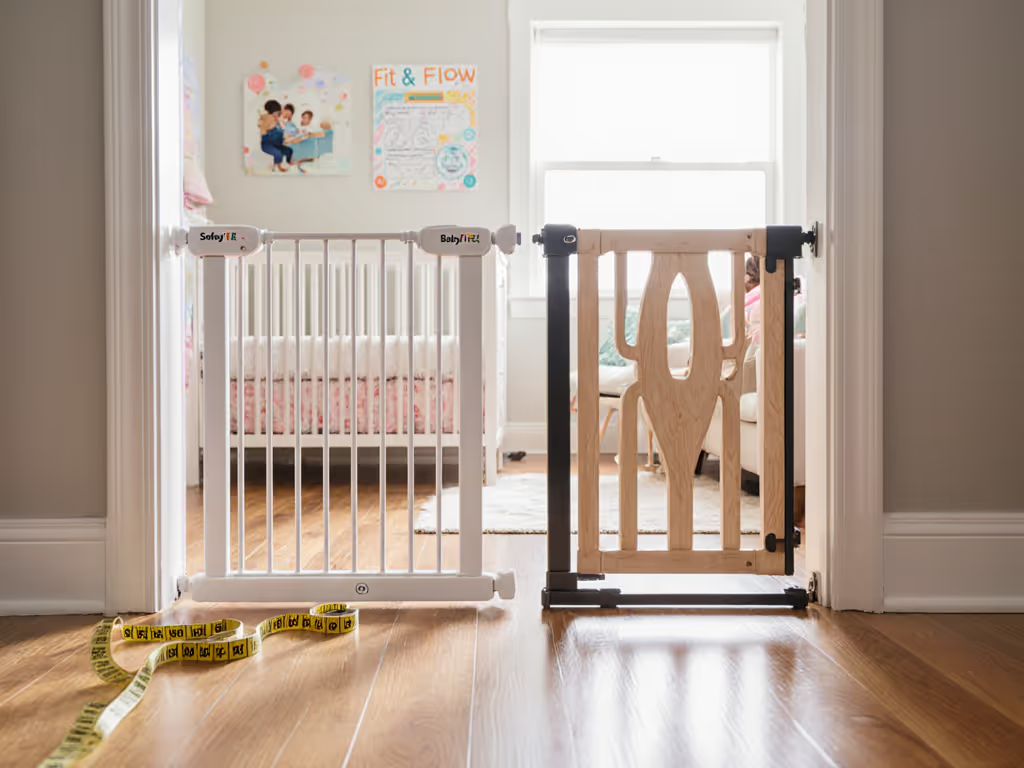
Solid bamboo gates, like the Mino Kesper model constructed without composite wood panels, typically emit significantly lower VOC levels by avoiding formaldehyde-based binders entirely. The solid bamboo construction provides structural integrity while maintaining cleaner air quality (critical for infants whose respiratory systems process 50% more air per pound of body weight than adults).

Doogie Freestanding Bamboo Dog Gate
Stylish, flexible barrier keeps pets contained without damaging your home.
$79.99
Width37-74"
Width37-74"
Pros
No-drill, freestanding design protects walls and rentals.
Stylish bamboo blends seamlessly with home decor.
Flexible Z-shape fits various doorways and openings.
Easy to fold and store when not in use.
Cons
Feet may shift, impacting stability on smooth floors.
Not suitable for blocking determined, larger pets.
Customers find the dog gate sturdy and functional, with one noting it's an attractive divider for open concept areas. The gate effectively keeps pets out of rooms and prevents them from approaching front doors, while being perfect for small dogs and easy to assemble.
Customers find the dog gate sturdy and functional, with one noting it's an attractive divider for open concept areas. The gate effectively keeps pets out of rooms and prevents them from approaching front doors, while being perfect for small dogs and easy to assemble.
Identifying Truly Low-Emission Products
When manufacturers claim "low-VOC" or "hypoallergenic gate materials," demand verification through:
- GREENGUARD Gold certification (TVOC limit: 0.5 mg/m³)
- California 01350 testing (measures emissions at 14, 28, and 180 days)
- Formaldehyde-specific testing below 0.016 ppm (the CDC's recommended indoor limit)
Don't trust vague 'eco-friendly' claims without third-party test reports. For a clear overview of gate safety certifications that complement emission testing, see our JPMA vs ASTM guide. The EPA notes that indoor VOC concentrations can be 2-5 times higher than outdoor levels, and up to 10 times higher during and immediately after product installation.
Critical Safety vs. Air Quality Tradeoffs
The Staircase Imperative
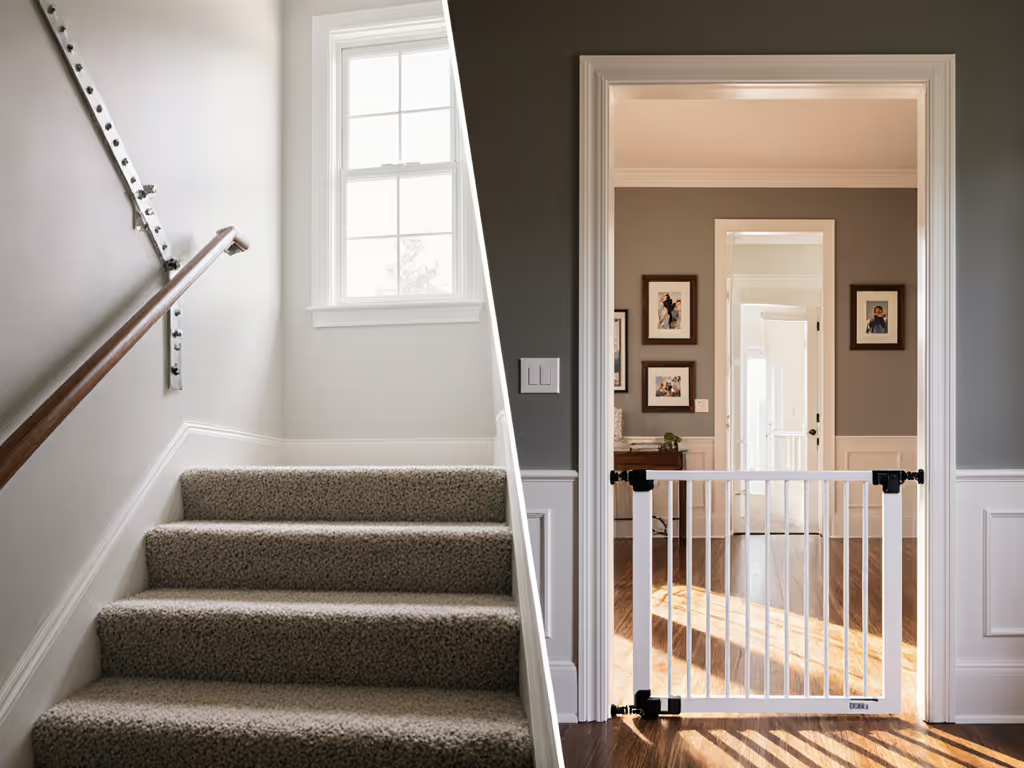
Hard stop: top of stairs needs hardware mounting
This isn't just my opinion, it is verified by incident data. Get the evidence in our pressure mount myth analysis. Pressure-mounted gates at the top of stairs routinely fail deflection tests under just 30 pounds of force (the weight of a walking toddler), creating dangerous flex even when they appear secure. During one home audit, I measured a gate flexing 2 inches under toddler weight, well within the manufacturer's marketing claims but far beyond acceptable safety margins. The solution wasn't a "better" pressure gate, but switching to a hardware-mounted unit with measured swing clearance of 3.2 inches away from the drop.
Here's what matters most at elevated hazards:
- Hardware mounting (minimum 2.5-inch screws into studs)
- Measured deflection under 0.5 inches at latch point
- Swing direction verified to move away from the drop
- Threshold clearance of 0.5 inches maximum for tripping safety
Air quality becomes secondary at these critical zones, but both factors matter in hallway and room dividers where your child spends extended time.
When Air Quality Becomes Primary
For interior room dividers and hallway gates where drilling isn't desired (renters, historical homes), focus on these measurable thresholds: Start with our renter-focused overview, Renter-Proof Baby Gates, to choose safe no-drill setups and know their limits.
- TVOC emissions below 0.1 mg/m³ per cubic meter of airspace (measured at 28 days)
- Formaldehyde below 0.005 ppm (half the CDC threshold)
- No detectable acetaldehyde or benzene (both found in some "low-VOC" paints)
Look for products tested to ASTM D6007 or ISO 16000 standards, methods that replicate real home conditions with 0.5 air exchanges per hour, 50% humidity, and 73°F temperatures. Cheap 'VOC-free' claims often reference content (what's in the product) rather than emissions (what actually enters your air). Emissions are what matter in everyday living spaces.
Choosing Wisely: A Data-Driven Approach
What to Demand From Manufacturers
Make these specific requests before purchasing:
- "Can you provide the full test report showing emissions at 28 days, not just 3 days?" (Most off-gassing occurs after initial installation)
- "What's the chamber loading factor used in testing?" (Must be ≥ 1 m²/m³ to simulate real conditions)
- "Does the product meet California 01350 Section 9.2 for infants?" (Stricter than general residential standards)
Physical material properties matter more than marketing:
- Solid wood thickness: A minimum of 1.25 inches prevents warping that creates new emission surfaces
- Edge sealing: Unsealed edges increase emissions by 40-70% according to EPA testing protocols
- Hardware composition: Zinc-alloy hinges emit fewer VOCs than plastic-coated alternatives
Rental-Friendly Solutions That Don't Compromise
For renters needing chemical sensitivity barriers without drilling:
- Verify banister compatibility: Minimum 1.5-inch diameter for secure clamp mounting (measure with calipers)
- Require swing clearance measurements: 2.75 inches minimum from obstruction to prevent binding
- Demand deflection test data: No more than 1.0 inch flex at 15 pounds force (simulates toddler push)
Note: These pressure-mounted solutions are only appropriate for flat surfaces away from elevated hazards. They require retesting every 90 days as tension decreases. Seasonal humidity and temperature swings affect materials differently; see Baby Gate Weather Care for maintenance that keeps emissions and safety in check.
The Bottom Line
Your gate selection must satisfy two parallel safety requirements: physical integrity and air quality. For top-of-stairs installations, hardware mounting is non-negotiable regardless of material emissions, no amount of "natural" bamboo offsets a potential fall hazard. In lower-risk zones, prioritize solid materials with verified emissions data over "low-VOC" marketing claims.
Remember: Numbers win arguments; measured flow prevents everyday mistakes and near-misses. Measure your space, verify manufacturer claims with specific data points, and never compromise on top-of-stairs mounting requirements. Your child's safety depends on both what you can see, and what you can't.
Further Exploration
For deeper verification:
- Download the EPA's "An Introduction to Indoor Air Quality" guide
- Access California DPR's Standard Operating Procedure for VOC testing
- Request test reports from manufacturers using the Consumer Product Safety Commission's template
When evaluating any safety product, insist on the same precision standards applied to building codes, because your child's environment should meet the same rigorous standards as the structure itself.
Related Articles