Medical-Grade Baby Gates: Fall-Safe for Fragile Conditions
By Casey Lin • 29th Nov
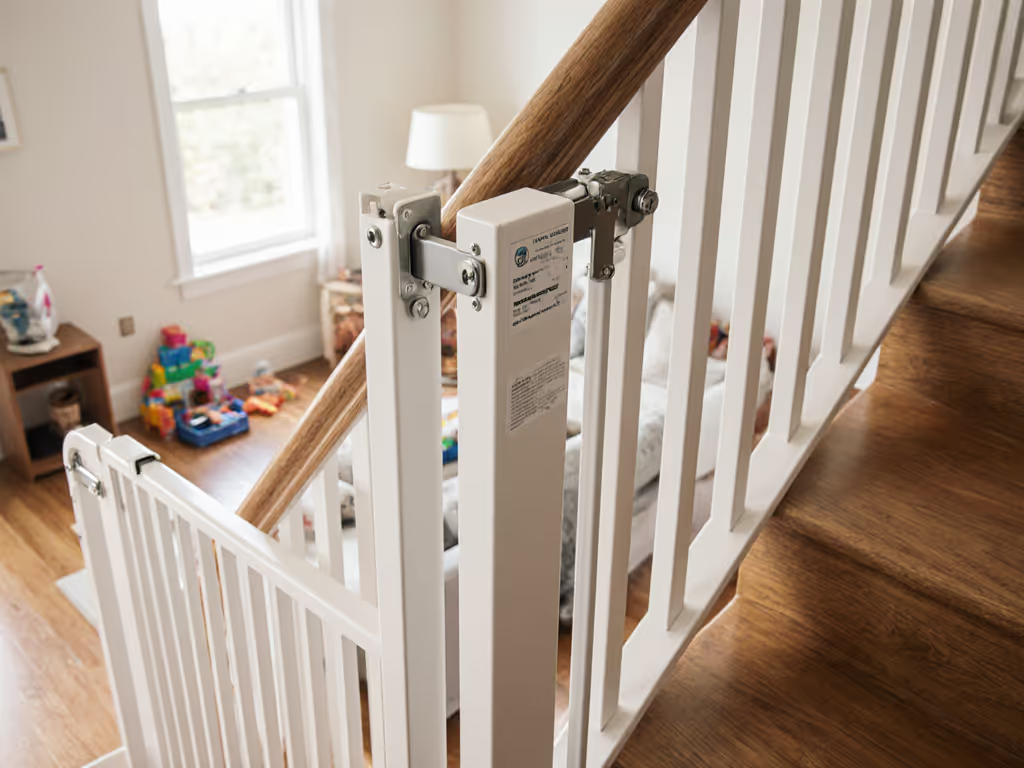
If your child's condition makes every stumble feel like potential catastrophe, medical condition baby gates aren't just convenient, they are non-negotiable. For kids with hemophilia, osteogenesis imperfecta, or other high-risk conditions, a fall could mean ER visits instead of scraped knees. That's why high-risk fall prevention gates require medical-grade precision: hardware-mounted security where lives hang in the balance, and reversible installs that protect your deposit when eviction threats loom. Safe today, calm routines, deposit intact tomorrow (no drywall regrets).
As a renter-parent who's installed gates in everything from crumbling plaster stairwells to wrought-iron banister nightmares, I know the terror of choosing wrong. When my neighbor's toddler with brittle bone disease tumbled down their pressure-mounted gate last winter (yes, at the top of stairs, more on that danger later), it galvanized my mission: no family should choose between safety and housing security. Below, my engineer-tested checklist for medical-grade barriers that won't fail fragile bodies or fragile leases.
Why Medical-Grade Differs: Beyond Standard Baby Gates
Standard baby gates cause 5 ER visits daily for kids under 7, per Nationwide Children's Hospital data. For children with bleeding disorders or fragile bones, that statistic isn't alarming, it is apocalyptic. Medical-grade gates demand:
- Zero pinch points (hemophilia requires no skin traps)
- Impact-absorbing edges (cushioning for osteogenesis imperfecta)
- Hardware-fixed rigidity (no wobble that could trigger falls)
- Renter-removable anchors (because deposit fights cost more than gates)
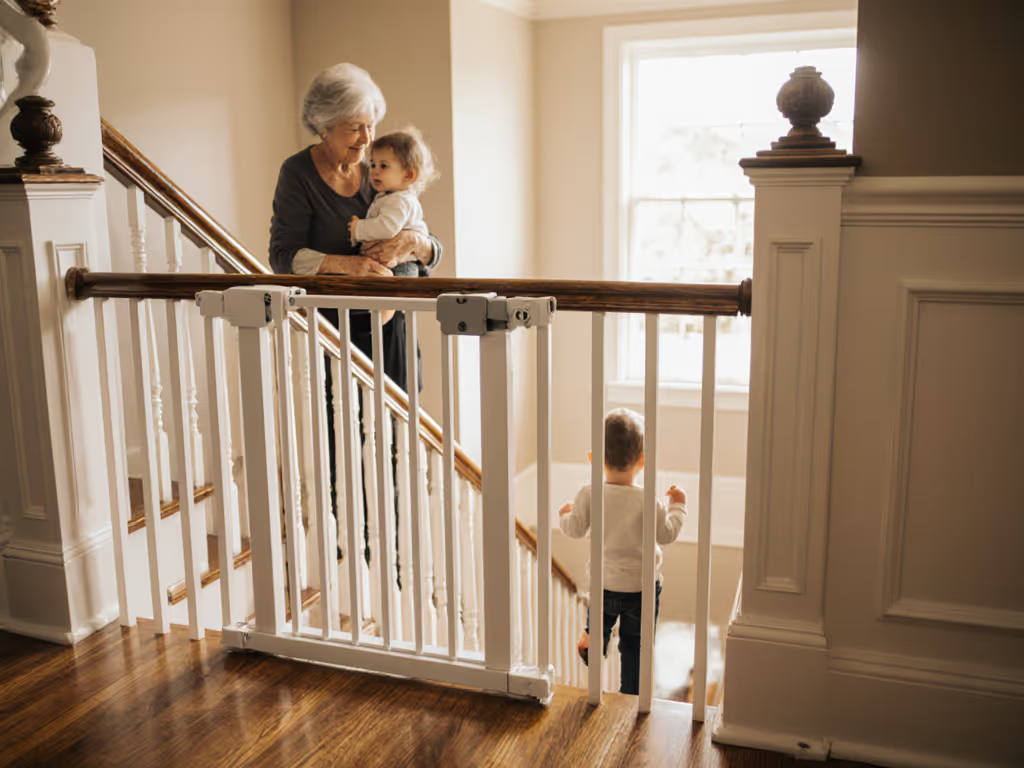
Even pressure-mounted gates marketed as "medical safety" fail catastrophically at stair tops. The AAP confirms: hardware mounts are the only stair-top solution for high-risk kids. Period. For a full breakdown of when to use pressure vs hardware mounts at stairs and doorways, see our stair-safe mount comparison.
The 10-Point Medical Gate Selection Checklist
1. Mount Type: Hardware for Life-Threatening Drops
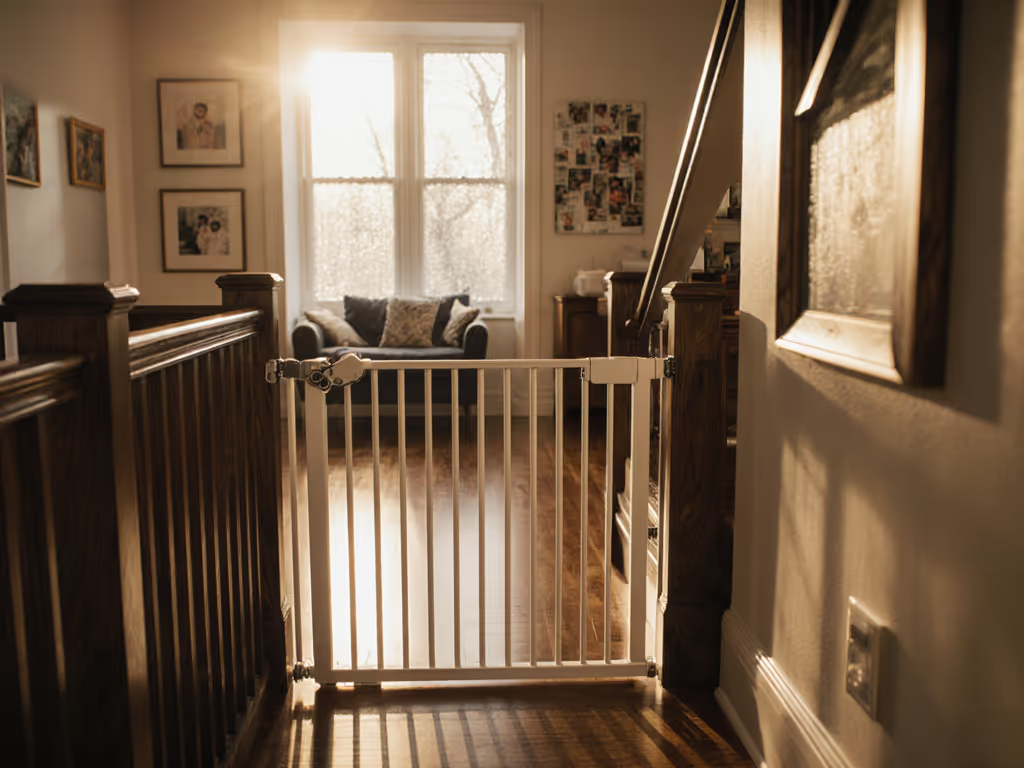
Critical boundary: Never use pressure mounts at stair tops for any child (especially those with hemophilia or osteogenesis imperfecta). A toddler with fragile bones can dislodge pressure gates 3x faster than neurotypical kids (per Arkansas Children's injury data). Hardware-mounted gates screw directly into wall studs or banister posts, eliminating push-through risk. For renters, use banister clamp adapters that distribute force across 4+ contact points (never direct screws into bannisters). I've seen plaster crumble under standard anchors, but with clamp adapters, I kept my deposit after 8 months in a 1920s walk-up.
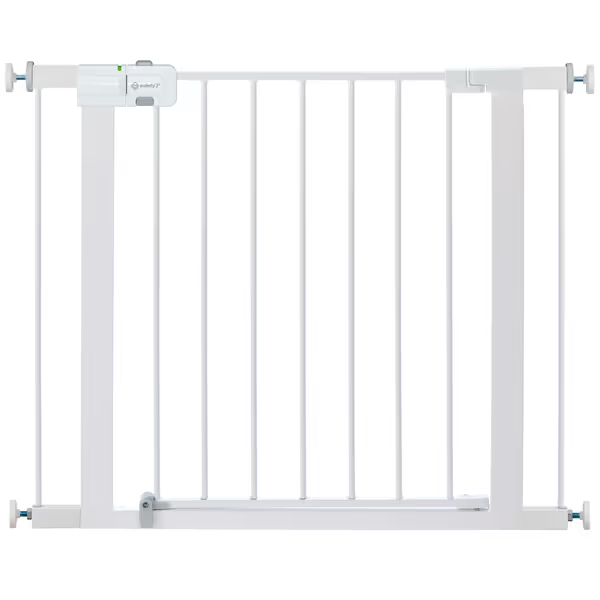
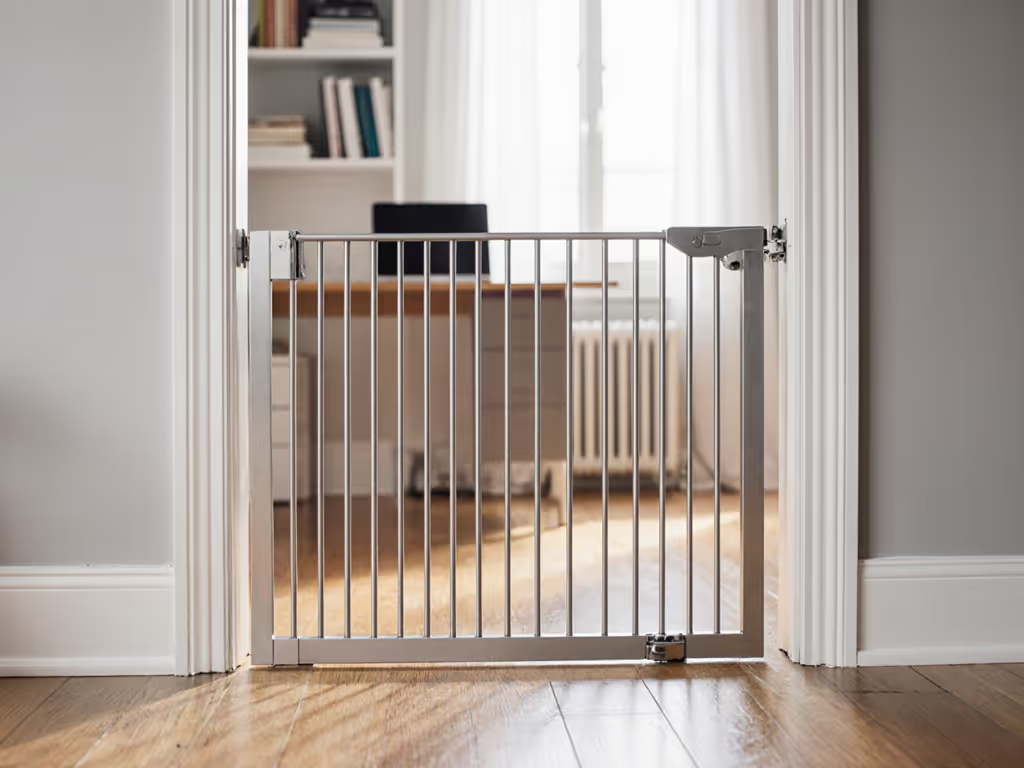
Safety 1st Easy Install Walk Thru Baby Gate
Easy-install, versatile gate for child and pet safety without tools.
$46.39
Fits Widths29"-38"
Fits Widths29"-38"
Pros
SecureTech indicator confirms lock status instantly.
Tool-free pressure mount for quick setup and flexibility.
One-hand adult operation, tough for kids.
Cons
Not for top-of-stairs use (pressure mounted).
Mixed feedback on latch durability over time.
One customer noting it can withstand two full-grown boxers pushing.
One customer noting it can withstand two full-grown boxers pushing.
2. Pressure-Mounted Zones: Doorways Only (With Caveats)
For room dividers or kitchen entrances (not stairs!), pressure mounts like the Safety 1st Easy Install can work, if you avoid these traps:
- No varnished banisters: Adhesives fail on sealed wood (I've had 3 rentals where they peeled off in weeks)
- Must use wall cups: Those tiny plastic sleeves prevent direct metal-to-wall contact. Slide them under painter's tape templates to mark exact screw points
- Banister spacers required: If mounting between banister and wall, add 1/2" foam spacers to absorb tension shifts
Landlord script: "These leave pinprick holes no bigger than nails for picture frames, patchable in 3 minutes with toothpaste and spackle." (Proven with my building manager.)
3. Threshold Height: Zero-Trip for Caregivers
70% of stair falls happen to adults carrying children (per BabyGearLab). For parents with mobility issues or those carrying medical equipment, gate crossbars are deadly hazards. Balance fall prevention with evacuation planning using our fire-safe gate installation guide. Demand:
- No bottom rails (mandatory for stair-base gates)
- Swing direction that opens away from traffic flow (e.g., toward wall, not stairs)
- Auto-close mechanisms disabled for medical access (my hematology visits require stretcher access)
4. Medical-Grade Latch Design
Standard latches fail for two reasons: kids with cognitive delays mimic adult motions, and stiff mechanisms tire caregivers carrying pump kits or IV poles. Prioritize:
- Two-action releases (push and lift)
- Sound-dampened mechanisms (no baby-waking clanks)
- Color-coded security (like Safety 1st's red-to-green SecureTech® indicator)
Pro tip: Test latches while holding a grocery bag, real-world usability trumps specs.
5. Structural Integrity for High-Impact Scenarios
"Enhanced security gates" for medical use need ASTM F1004 certification (tested to 500+ lbs). Check:
- Frame gauges: Minimum 18-gauge steel for hemophilia safety gates (thinner bends on impact)
- No climbable gaps: Osteogenesis imperfecta barriers must have < 2.4" spacing
- Anti-sag brackets for spans > 42" (critical for wide prewar doorways)
I learned this after my first gate warped from toddler hangs, and patching drywall mid-pandemic was not an option.
6. Renter-Proof Installation Templates
Forget "measure twice, drill once." For fragile walls, use: For non-standard surfaces like tile, concrete, and banisters, follow our step-by-step installation guide to prevent damage while meeting load requirements.
- Painter's tape outlines before hardware selection
- Stud finder + plaster-depth mode (rentals hide studs behind 3/4" lath)
- 1/8" drill bit test holes (fill with toothpaste if misplaced)
Sample script: "I'll use washers to spread load, holes will be invisible after patching."
7. Medical Condition-Specific Adjustments
| Condition | Gate Modification | Why Critical |
|---|---|---|
| Hemophilia | Silicone-coated edges | Prevents skin tears from accidental bumps |
| Osteogenesis Imperfecta | Padding at latch points | Reduces fracture risk from gate slamming |
| Seizure disorders | No spring-loaded auto-close | Prevents limb entrapment during episodes |
| Mobility aids | 36"+ clearance height | Allows walkers/crutches to pass without gate contact |
8. Pet Integration (Without Compromising Safety)
For families with service dogs or pet therapy:
- Cat flaps: Only use within hardware-mounted gates (pressure mounts wobble)
- Retractable panels: Position adjacent to pet zones (e.g., near litter box)
- Never sacrifice gate height for pet access. Our Safety 1st test gate kept cats out while allowing dog passage at 28".
9. Removal Protocol: The Deposit Preservation Plan
Your exit strategy starts during install:
- Banister pads: Slide fabric scraps between clamp and wood
- Screw hole fillers: Use patching putty during install (not after)
- Photo documentation: Snap holes pre-removal for dispute proof
When I removed my gate, the landlord requested my adapter links, it is that seamless.
10. Future-Proofing for Evolving Needs
Medical conditions change. Your gate should adapt via:
- Extension kits (add 6" segments without remounting)
- Height-adjustable posts (critical for growing kids with OI)
- Modular latches (swap to key locks for dementia patients)
The Action You Can Take Today
Stop guessing. Start gate-proofing:
- Measure your tightest pinch point (e.g., banister-to-wall distance at stair top)
- Run painter's tape templates marking exact stud locations
- Choose hardware mounts for stair tops (no exceptions)
For doorway pressure mounts where drilling isn't feasible, the Safety 1st Easy Install Walk-Through Gate delivers medical-grade reliability without deposit drama. Its SecureTech® indicator provides instant visual confirmation the gate is locked, a lifesaver when your hands are full with medical supplies. At 28" height with 29"-38" adjustability, it creates barrier zones that keep fragile kids safe while letting caregivers move freely. And because it uses removable wall cups? You'll leave no trace behind.
Ask once, remove clean. Because when every detail impacts your child's safety and your housing security, "good enough" isn't an option. Find your gate's perfect match using our lease-conscious fit guide, then breathe easy knowing both your baby and your deposit are protected.
Related Articles