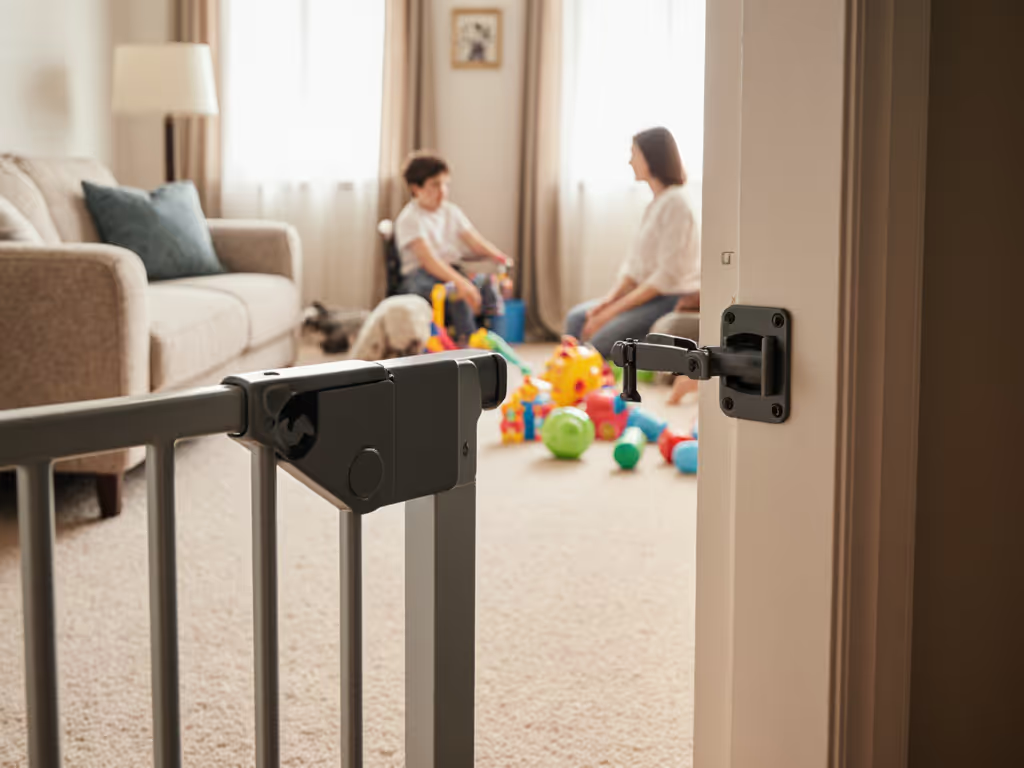
Moisture-Resistant Baby Gates for Indoor Pools
By Nia Okoye • 10th Jan
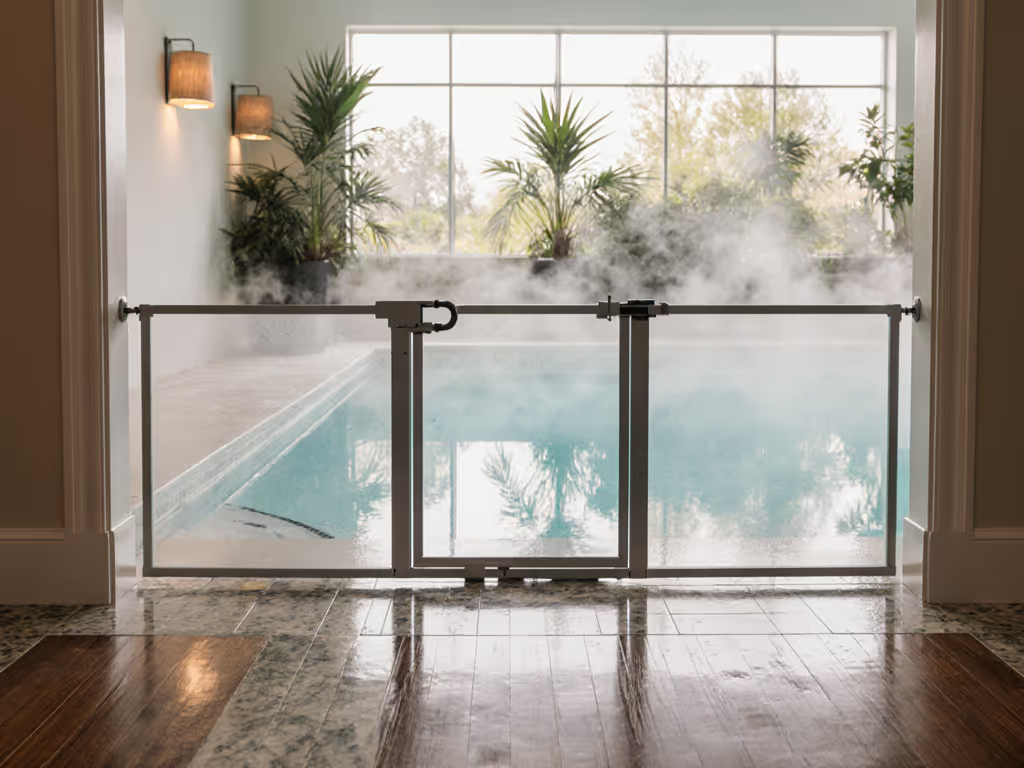
If you're navigating the unique challenges of baby gates for indoor pools or managing water feature childproofing in your home, you're not alone. Many families with indoor pools, sunroom spas, or decorative fountains struggle to find solutions that balance safety with practicality. As a former infant-room director turned home safety specialist, I've helped hundreds of caregivers (including grandparents, nannies, and multi-pet households) create reliable safety systems that actually work with their daily routines. The good news? Low-friction habits prevent more mishaps than complicated gear or rules. Let's transform your anxiety into actionable peace of mind.
Why can't I just use a standard baby gate for my indoor pool area?
Standard baby gates often fail in humid environments because:
- Moisture warps wood and plastic components, causing misalignment and latch failures
- Metal hardware corrodes from constant exposure to pool chemicals and humidity
- Pressure-mounted gates lose tension when expansion/contraction occurs in moisture-rich air
- Threshold bars become slippery hazards when damp
Indoor pool areas require moisture-resistant gate materials specifically engineered for consistent performance in 60-80% humidity. Look for gates with marine-grade stainless steel hinges, UV-stabilized polymers, and non-porous surfaces that wipe clean without degrading. These specialized indoor pool gate solutions maintain structural integrity where ordinary gates would sag or fail within months.
Make the safe action the easy one. When your gate operates smoothly with one hand while carrying a toddler, safety becomes automatic, not an afterthought.
What are the top safety risks with indoor pools that parents miss?
Most families focus on the pool itself but overlook these critical vulnerabilities:
- Slippery transitions: Wet floors near pool entrances create tripping hazards for caregivers holding children
- Secondary water features: Indoor fountains or decorative ponds often lack proper fountain safety barriers
- Hidden access points: Pet doors, French doors, or sliding glass doors that bypass primary barriers
- Multi-user confusion: Different caregivers (parents, grandparents, babysitters) using inconsistent gate techniques
A recent home safety audit by the National Drowning Prevention Alliance found that 68% of indoor pool incidents occurred at secondary access points, not the main pool area. If sliding glass doors are one of your access points, see our no-drill sliding door gate alternatives for safer configurations. This is why comprehensive aquatic home safety requires examining all potential pathways to water, not just the obvious ones.
How do I choose between pressure-mounted and hardware-mounted gates in humid environments?
This is where I see many families struggle unnecessarily. The choice isn't just about safety, it's about designing for real-life use:
Pressure-mounted options work best when:
- You're in a rental property
- The doorway has straight, smooth surfaces (no baseboards or trim)
- Humidity stays below 70% consistently
- You can incorporate wall protectors to prevent slippage
Hardware-mounted gates are essential when:
- Humidity regularly exceeds 70%
- You have architectural challenges (curved walls, uneven plaster)
- The gate protects top-of-stairs access to the pool area
- Multiple caregivers use the space
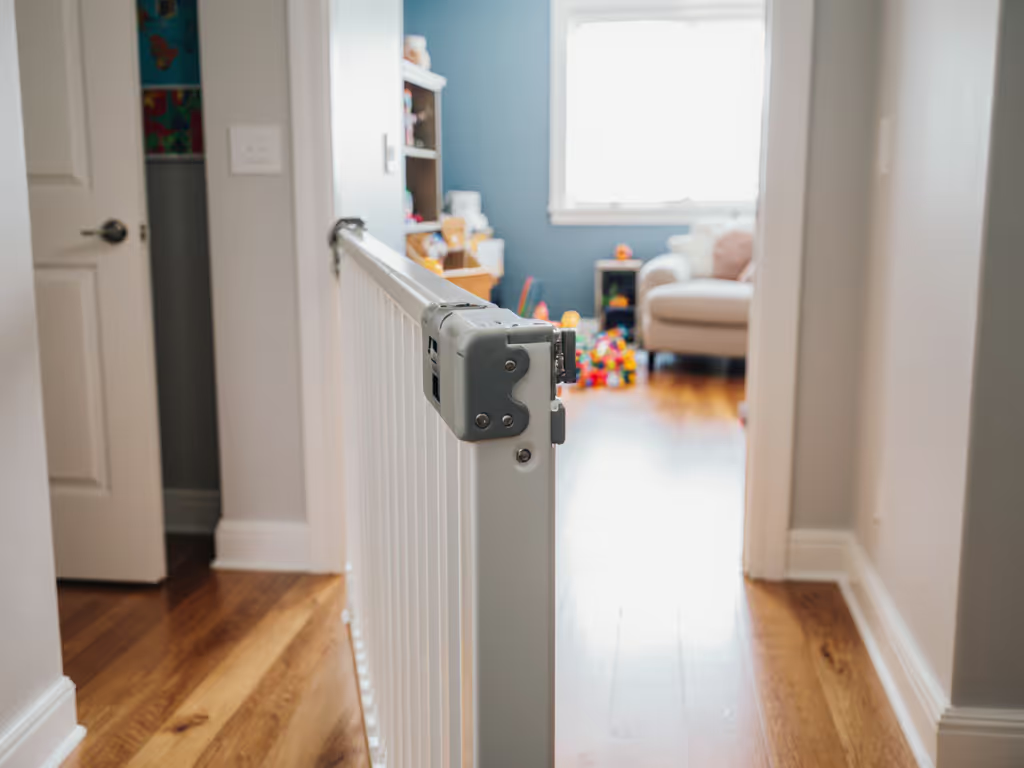
For indoor pool gate solutions, I recommend hardware-mounted systems for primary pool access points. They withstand moisture-induced expansion better and maintain consistent latch tension (critical when safety depends on proper closure every single time). Consider adding silicone-coated tension pads if you must use pressure mounts in humid zones.
How can I train myself and other caregivers to consistently use gates properly?
This is where most safety systems fail, not from poor equipment, but from unsustainable habits. Remember my grandmother's lesson: she kept missing the latch until we moved the handle to her dominant side and set the swing away from the step-down. We practiced one-handed closes during snack time, added a visual cue sticker, and placed a basket to prevent propping. Make safety the default, not the exception, every day. If multiple caregivers use the space, establish shared rules with our universal gate safety protocol.
Create automatic behaviors through these simple steps:
- Anchor the habit: Pair gate closing with an existing routine ("After I set down my coffee cup, I close the gate")
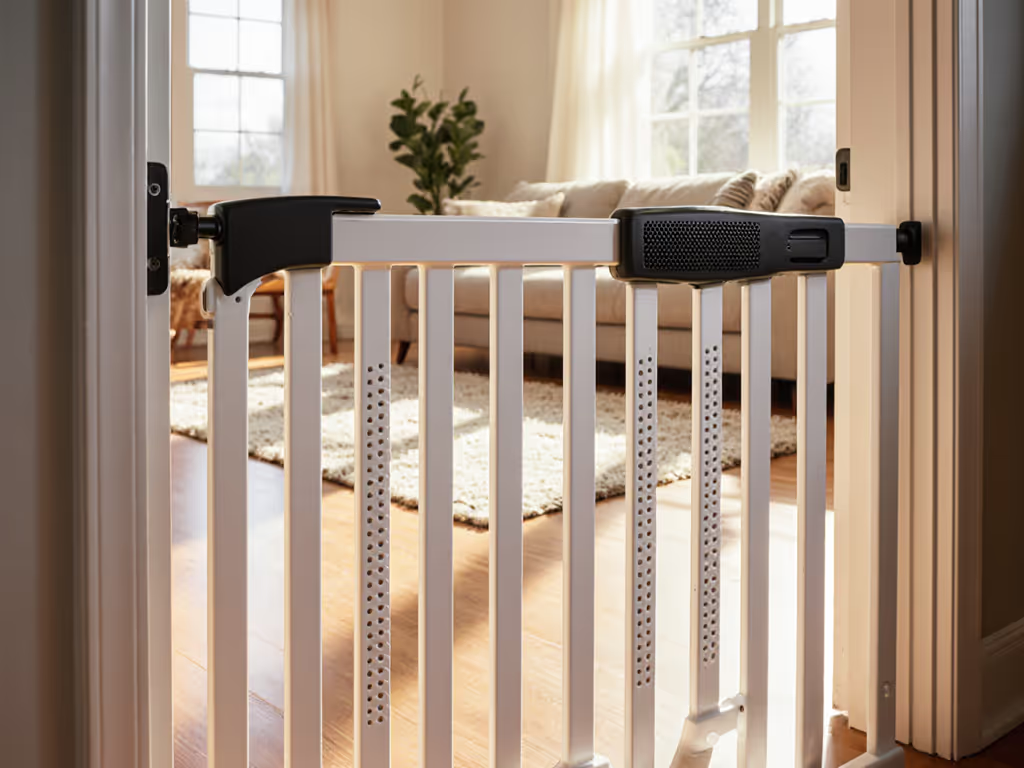
- Optimize mechanics: Position latches at 32-38" height (average adult elbow height) for comfortable one-handed operation
- Visual reminders: Use contrasting color tape on the latch area, visible but not obtrusive
- Practice drills: Spend 60 seconds during morning coffee practicing smooth, quiet closures
What are stylish options that blend with home decor?
You shouldn't have to sacrifice aesthetics for safety. Modern moisture-resistant gate materials come in:
- Brushed nickel finishes that complement stainless pool fixtures
- Clear polycarbonate panels that maintain sightlines
- Wood-look composites that match trim without warping
- Custom powder-coated colors to match your palette
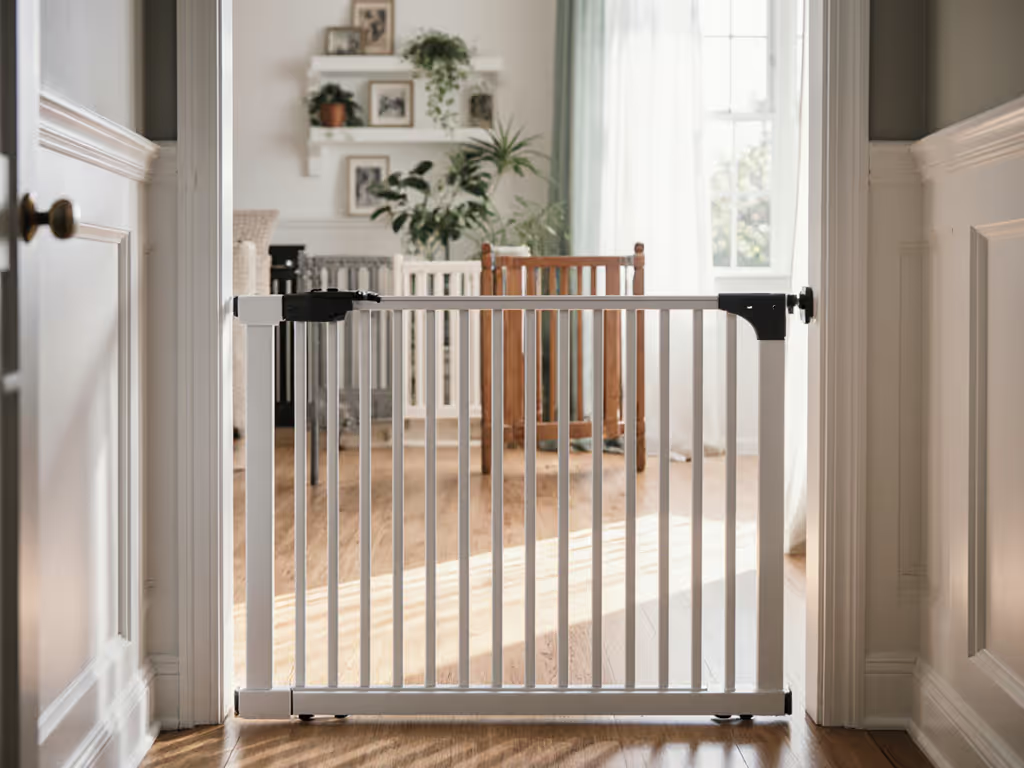
The key is choosing gates with minimal visual footprint (no bulky frames or industrial hardware showing). Look for streamlined designs where the latch mechanism hides within the frame when closed. These subtle details reduce "safety clutter" while maintaining rigorous protection.
How do I handle pet safety alongside baby gate installation?
Pets create unique challenges for water feature childproofing:
- Dogs may push through weak gates while chasing toys
- Cats can jump over standard heights
- Automatic pet doors compromise water safety
My solution for multi-pet households:
- Install dual-height gates: 32" for toddlers with a cat flap at 24"
- Use pet gates with reinforced kick plates to prevent paw leverage
- Create separate pet pathways using moisture-resistant mesh barriers
- Train pets with positive reinforcement near the gate area
The goal isn't to exclude pets but to design integrated safety that accommodates all household members without compromising protection.
What's the first step I should take right now?
Don't get overwhelmed by the "perfect" solution. Start with this 10-minute action:
- Walk every potential pathway to your indoor pool while carrying a pillow (simulating a child)
- Identify your two highest-risk access points (typically the main entrance and any secondary routes)
- Test existing gates for moisture damage, warping, sticking latches, or corrosion
- Mark gate swing direction with removable painter's tape to optimize flow
This simple assessment creates immediate awareness while building your personalized safety plan. For pool areas with tile, concrete, or banisters, follow our step-by-step installation guide to ensure a secure, damage-free mount. I've seen families transform their anxiety into confidence through these small, sustainable steps (often without purchasing new equipment).
Remember, the most effective baby gates for indoor pools aren't just about the hardware, they're about designing systems that work with your natural movements. When you make the safe action the easy one, protection becomes automatic, peaceful, and perfectly suited to your family's life. Your next step? Spend five minutes today optimizing just one gate's operation, your future self will thank you when safety requires no second thought.
Related Articles