Smart Baby Gates: Sensor Accuracy Tested & Ranked
By Nia Okoye • 12th Apr
What's the Real Difference Between Smart and Standard Baby Gates?
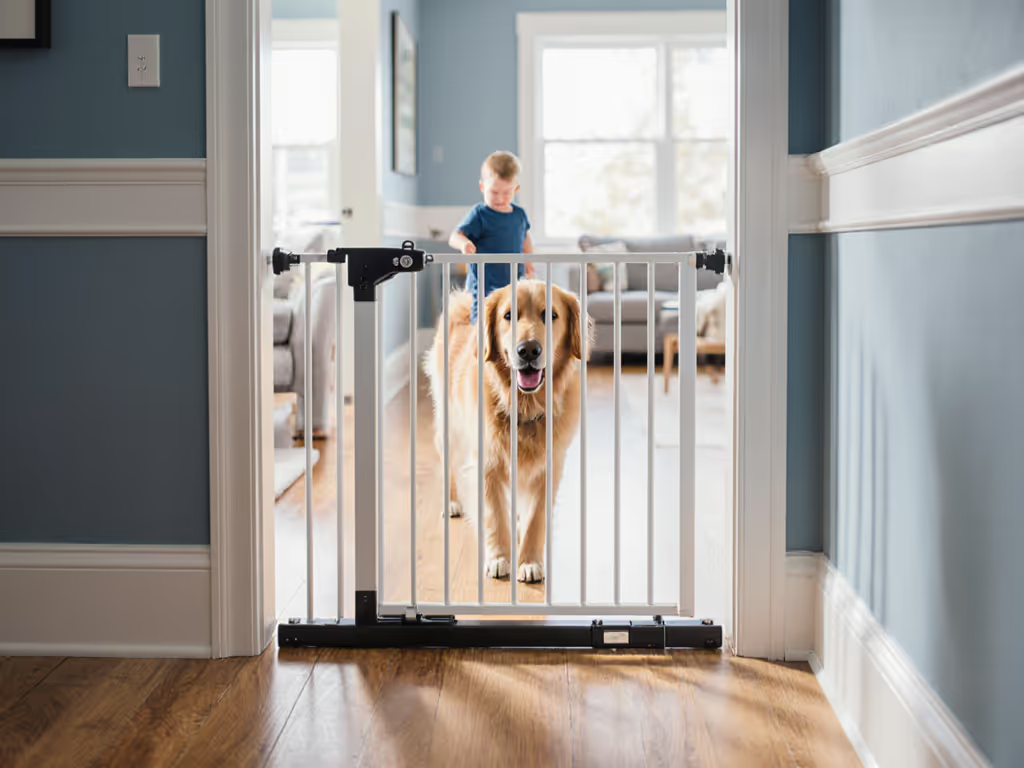
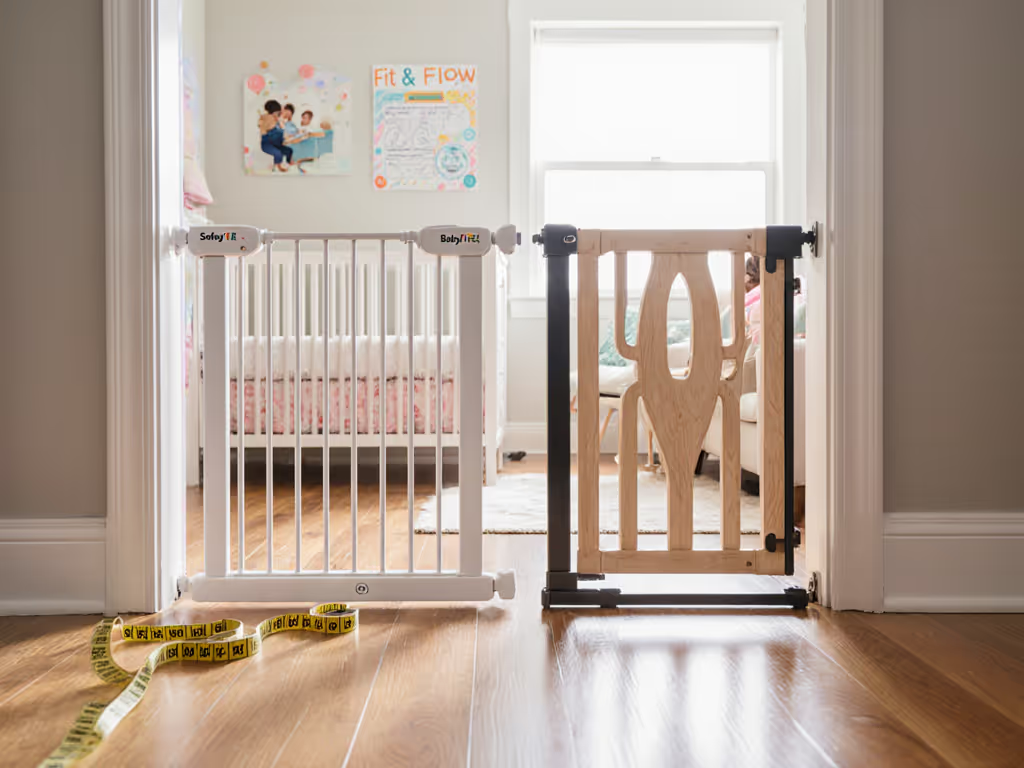
When you're choosing between a smart baby gate and a basic pressure mount, the gap is not about gadgetry (it is about reducing the friction between you and safe, automatic closure). A monitored baby gate system removes the mental load of checking whether the gate is latched; it confirms it for you, often with a quiet alert if something goes wrong. Standard gates require a manual check every single time. Smart gates, equipped with sensor arrays and acoustic feedback, aim to make that check invisible. For a side-by-side feature breakdown of leading models, see our smart baby gate comparison.
But here's what matters most: a gate's intelligence is only as good as its usefulness in your daily rhythm. I have seen families invest in connectivity features they never used, while overlooking whether the latch felt natural to their non-dominant hand or if the swing direction matched their traffic flow. Technology works best when it slides into habit, not when it demands attention.
How Do Gate Sensors Actually Work, and What Should You Trust?
Understanding Infrared Proximity Detection
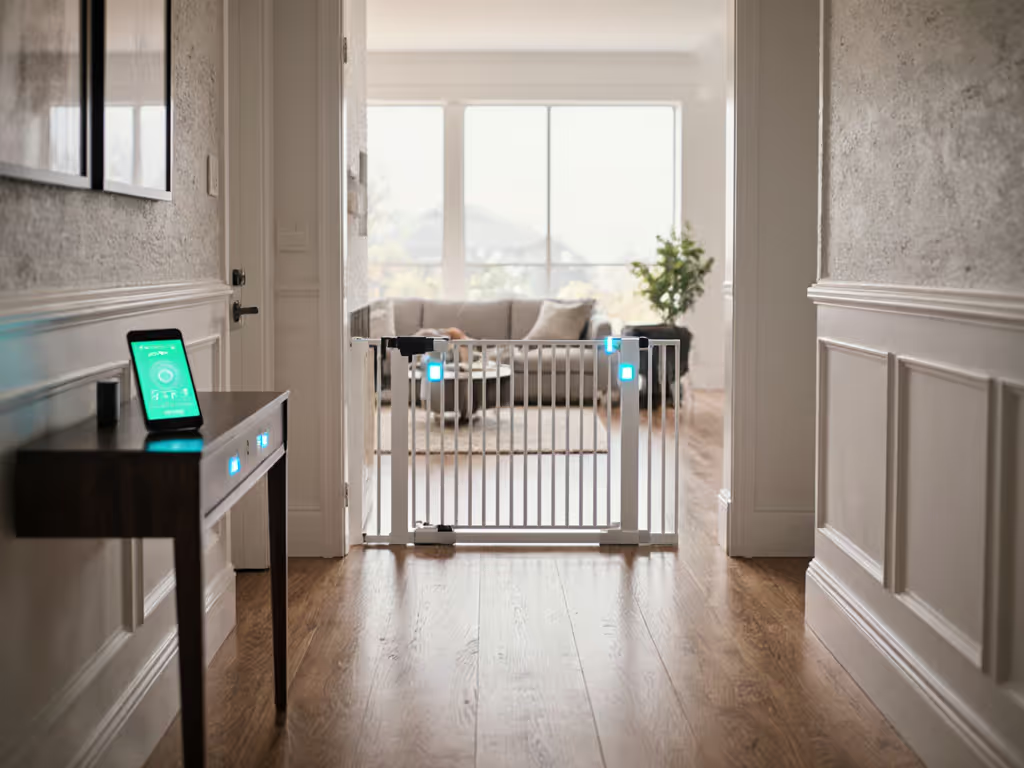
Most smart gate sensor accuracy testing centers on one core technology: infrared proximity sensing. High-precision infrared arrays (typically with a 45-degree detection cone) recognize your approach in milliseconds and trigger the gate to unlock automatically. You do not stop, reach, twist, or wait. You just walk through.
In laboratory conditions, these systems perform reliably. Understand what certifications actually mean in our JPMA vs ASTM guide. The real-world test, though, is messier: Are you carrying a baby? Is your phone in the way? Does the sensor fire when the cat brushes past? A credible system will have a detection range you can verify and adjust if needed.
The Alarm Layer (Your Safety Backstop)
Connected gate alert systems often pair proximity sensing with an integrated acoustic alarm. If the gate does not latch fully, you hear an immediate beep (not a soft chirp that blends into household noise, but a genuine alert). This is the difference between a gate that looks closed and one that confirms it is secure.
Example: A well-designed smart baby gate uses an integrated alarm to signal incomplete latches, complementing its infrared unlock. While the auto-unlock is convenient, the alarm is the real safety workhorse (it catches the latch every time, whether you are distracted or not).
Which Smart Features Actually Prevent Injury, and Which Are Just Nice to Have?
Rank These by Real-World Impact
Tier 1: Non-Negotiable (Directly Prevents Injury)
- Integrated closure confirmation (audible alarm or visual indicator). Catches a partial latch that you would miss in a glance. See how reliable these indicators are across brands in our safety indicator tests. This prevents the gate from drifting open as a child approaches.
- Reliable latching mechanism tested across multiple user strengths and heights. A weak latch that works for you might not secure under a toddler's lean or a pet's push.
- Clear, unambiguous unlock sequence. If a caregiver (grandparent, babysitter, visiting family) cannot figure out how to operate it, they either prop it open or get frustrated and leave it ajar.
Tier 2: High Value (Reduces Friction, Boosts Compliance)
- Auto-close and hold-open option. Lets you carry groceries through the kitchen without staging the gate open. Reduces the temptation to prop.
- Quiet operation. A gate that does not screech builds a habit of consistent closing, especially around nap times. We measured latch and swing noise in our quiet baby gate noise tests.
- One-handed accessibility. Matches the way real caregiving works: one hand on the child, one on the latch.
Tier 3: Nice-to-Have (Convenience, Not Safety)
- Remote app notifications (nice for a babysitter, but will not prevent injury if you are not watching).
- Smartphone integration and history logs.
- Voice activation.
Make safety the default, not the exception, and that means prioritizing features that make safe use feel effortless, not features that require you to remember to check an app.
What Does Sensor Accuracy Actually Mean, and How Do You Test It?
Gate sensor accuracy testing comes down to three measurable questions:
- Detection consistency: Does the sensor recognize you every time you approach, or are there dead zones? Test by approaching from different angles and speeds.
- False-alarm rate: Does it trigger when nothing is there (cat, air movement, reflective surface)? A gate that cries wolf too often will be muted or ignored.
- Latch confirmation reliability: When you close the gate, does the alarm sound only if it is actually unsecured? Cross-test with deliberate partial closes.
For any child movement detection gates, run a practical audit:
- Have multiple caregivers approach the gate at different times of day and from different angles.
- Close it partially on purpose and verify the alarm responds.
- Approach while carrying items; approach with a pet at your feet.
- Note whether the sensor responds in bright sunlight, low light, and artificial lighting.
How Do Monitored Systems Compare to Standard Pressure Gates?
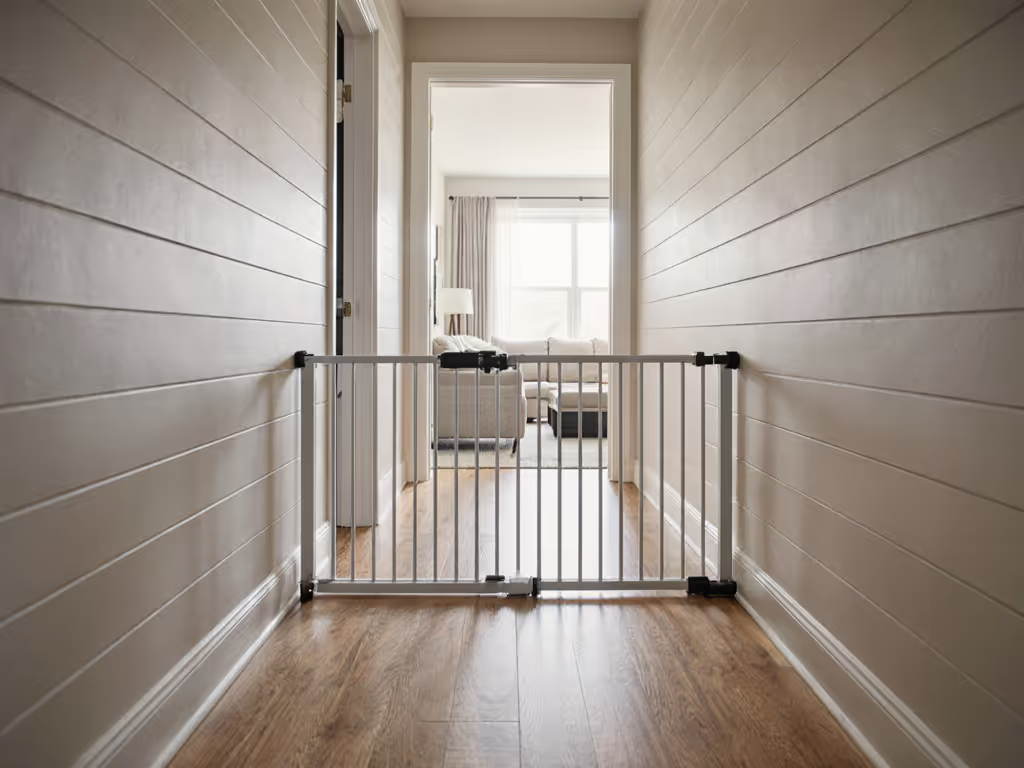
Pressure Mount vs. Smart Monitoring
| Feature | Pressure Mount | Monitored System |
|---|---|---|
| Setup | No tools, minimal install | No tools (if pressure-mount design); may include smart hub |
| Operation | Manual unlock, manual check | Infrared auto-unlock, integrated alarm |
| Safety Assurance | Visual confirmation only | Acoustic alert if latch incomplete |
| User Experience | Stop, unlock, push, close | Continuous walk-through flow |
| Multi-Caregiver Ease | Relies on habit memory | Alarm reduces reliance on caregiver attention |
| Battery/Power | None | Batteries or wired hub required |
| Cost | Lower | Higher |
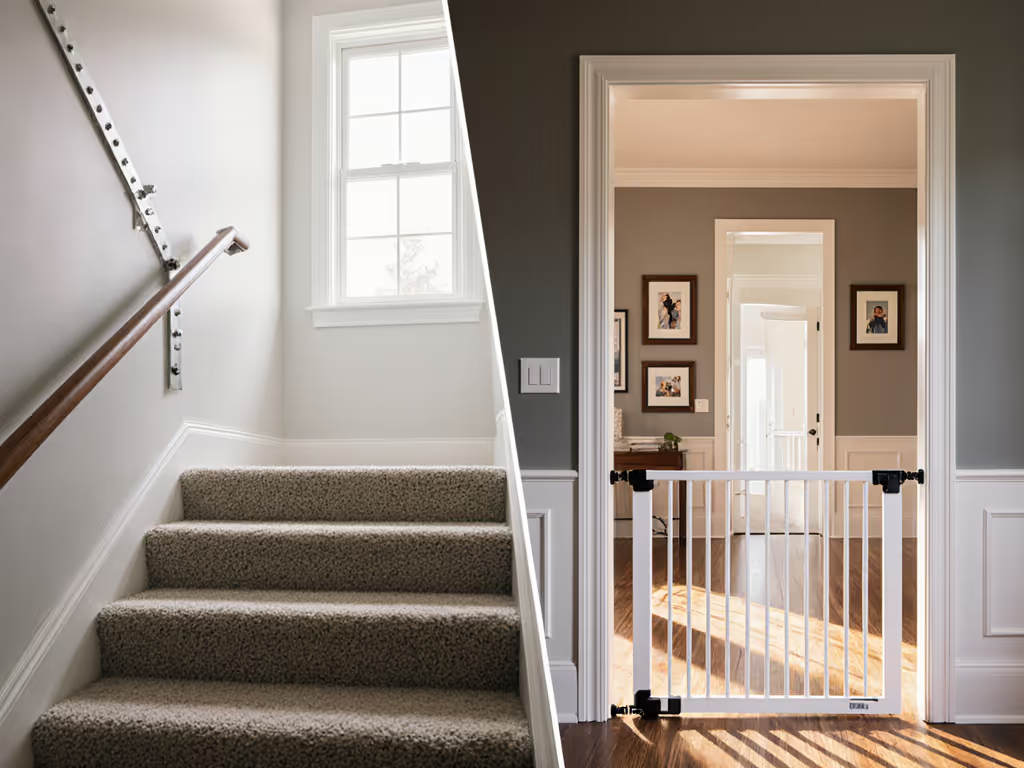
The trade-off is straightforward: you pay more for a gate that removes the cognitive step of checking the latch, and in return you get consistent safety with far less daily friction. If you're comparing mounting methods for stair safety, don't miss our pressure mount myth explainer.
Related Articles