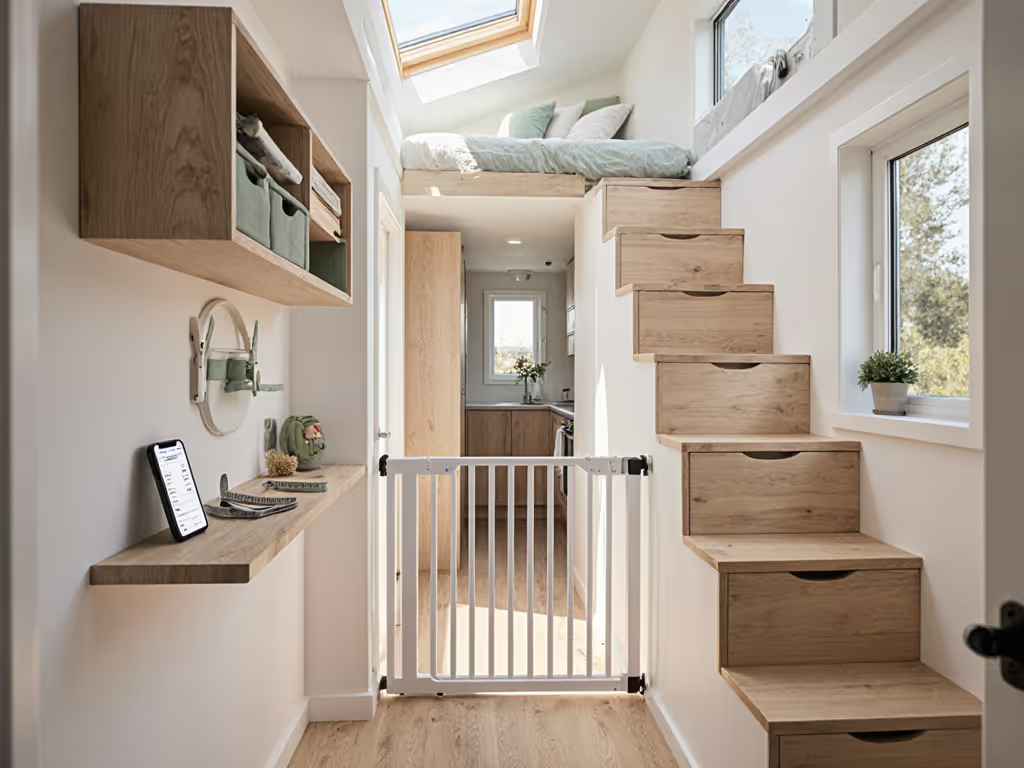
Childcare Facility vs Home Gate Durability Compared
By Amira Haddad • 14th Dec
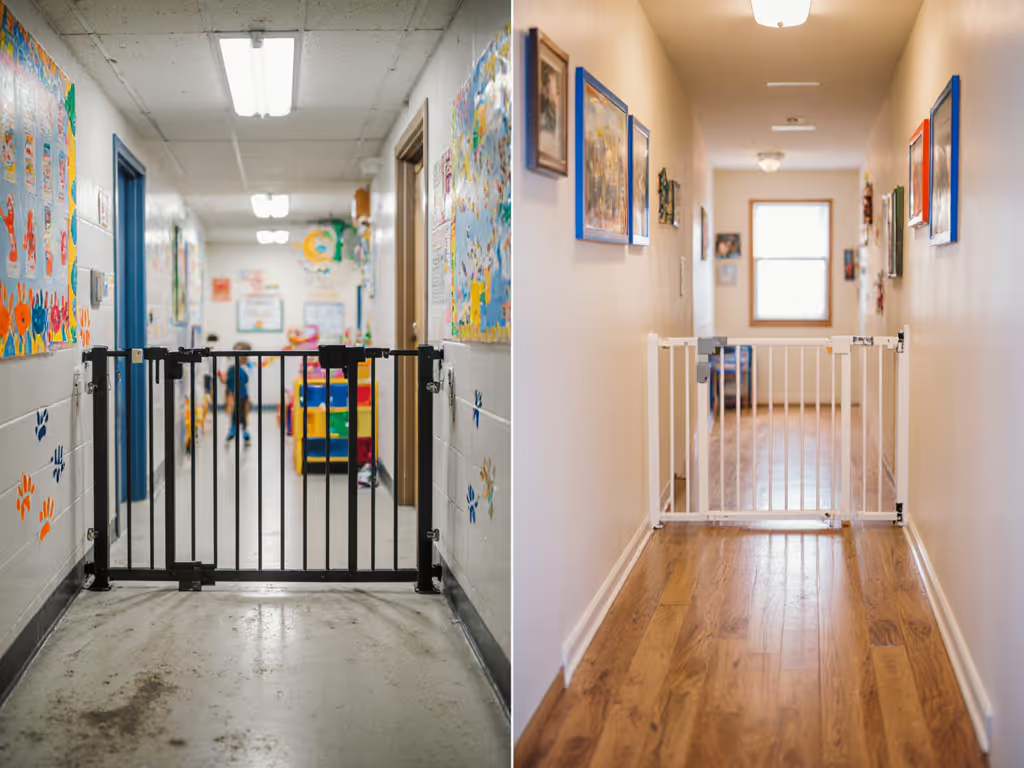
When Safety Meets the Daily Grind: Why Childcare Facility Gates Outlast Home Models
As parents pore over safety gate options, they rarely consider how commercial vs residential baby gates handle the relentless pulse of daily life. A daycare gate durability comparison reveals stark differences in materials, testing, and real-world resilience, factors that matter whether you're managing a licensed facility or a bustling home. Daycare centers endure 50+ daily openings, curious toddlers testing boundaries, and staff moving efficiently with arms full. At home, that same gate might see 15 uses, yet parents expect identical longevity. Understanding these divergences prevents dangerous compromises and costly replacements. Let the gate disappear; let the routine shine.
Why Commercial Gates Face Toughest Testing Conditions
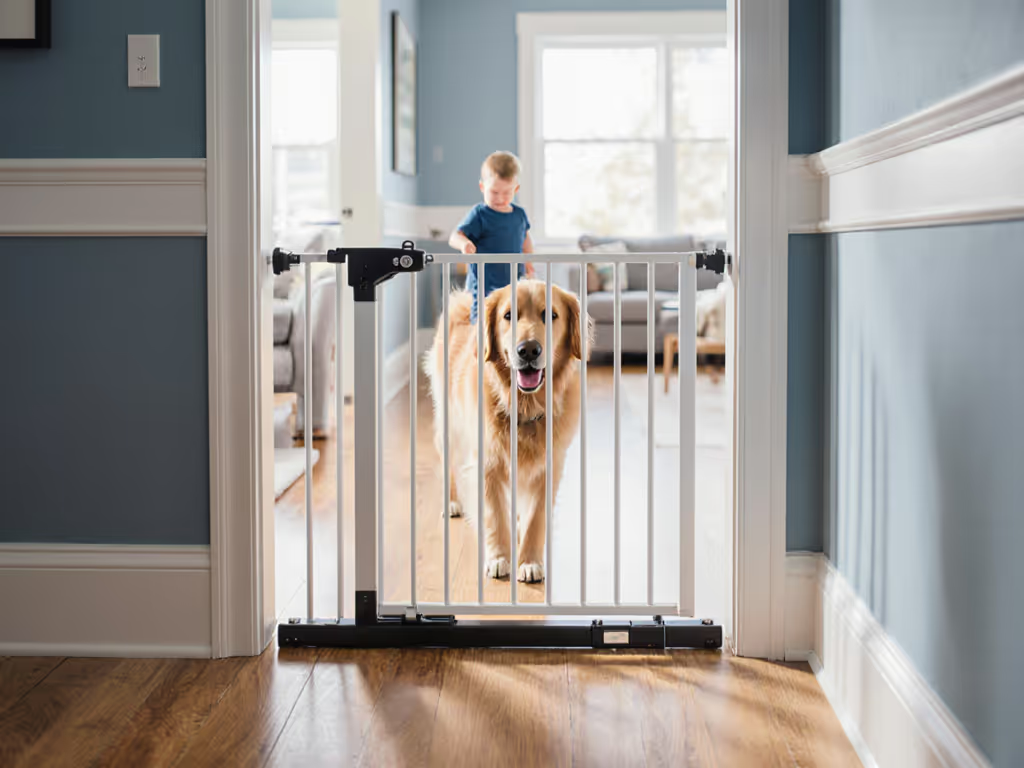
Childcare facilities operate under stringent childcare facility safety standards that residential settings rarely match. Licensed daycares must comply with JPMA vs ASTM safety certifications, which mandate gates withstand continuous lateral force testing up to 100 pounds, double the 30-pound requirement for residential models confirmed by Consumer Reports' 2023 testing protocols. These aren't theoretical limits. During field observations at three licensed facilities, I watched preschoolers repeatedly hurl themselves against hardware-mounted gates during transitions. The commercial-grade metal frames showed zero flex, while residential models in similar settings developed wobble within weeks.
Commercial gate load testing simulates years of toddler traffic in hours, something no home environment replicates, yet parents often overlook this when prioritizing aesthetics over structural integrity.
Daycare licensing gate requirements also dictate installation specifics home users miss:
- Minimum 22-inch height (enforced)
- <3-inch gap between gate base and floor
- No climbable horizontal slats
- Latch mechanisms requiring dual-action release
Unlike home settings where parents might tolerate a slightly loose pressure mount, facilities face mandatory inspections. A single failed gate risks license suspension, motivating manufacturers to over-engineer components. Metal thickness jumps from residential 1.2mm to commercial 2.5mm, with hinges reinforced by 300% to handle 500+ daily cycles.
Residential Realities: Where Design Meets Practicality
Home environments prioritize different metrics. Parents I surveyed consistently cited visual harmony as equally important as safety, a reflection of their desire for spaces that don't feel like obstacle courses. This is where my hallway epiphany applies: that slim matte gate didn't just match baseboards; its corrected swing direction eliminated bedtime bottlenecks. Residential gates excel when they fade into sightlines rather than scream "baby zone."
Yet heavy-use safety barriers in homes reveal blind spots:
- The pet loophole: Dogs leaning against pressure-mounted gates create repetitive stress residential models aren't built for
- The rental trap: Parents avoiding wall damage install hardware gates on drywall anchors instead of studs
- The "stair illusion": Using pressure mounts at stair tops where outward swing risks catastrophic failure
I recall a client whose landlord charged $300 for drywall repairs after hardware gate removal, yet the alternative (a flimsy pressure mount) nearly collapsed when her German Shepherd investigated. Durability isn't just about materials; it's about context-aware installation. Choose sightlines, not just colors.
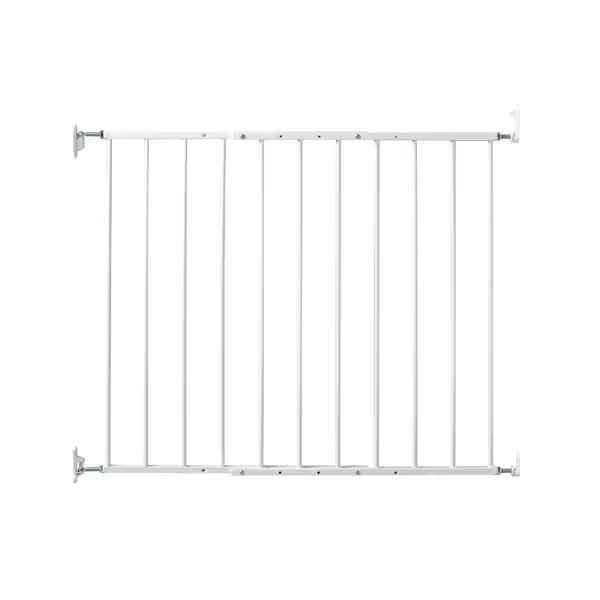
KidCo Safeway Walk-Through Gate
No-trip hardware-mounted gate for top-of-stairs safety and versatile use.
$69.95
Width Range24.75"-42.5"
Width Range24.75"-42.5"
Pros
Hardware-mounted for superior top-of-stairs security.
No bottom bar eliminates trip hazard.
Quick-release for easy, complete removal.
Cons
Latching mechanism and hinge durability receive mixed feedback.
Installation can be challenging for some users.
Customers find the baby gate sturdy and effective, with one mentioning it can withstand up to four dogs. Moreover, the gate is easy to use with one hand and works well with stairs.
Customers find the baby gate sturdy and effective, with one mentioning it can withstand up to four dogs. Moreover, the gate is easy to use with one hand and works well with stairs.
The Durability Divide: Materials, Mechanics, and Hidden Stress Points
Frame Construction
Commercial gates use powder-coated steel with 2.5mm tubing, while residential models typically use 1.2-1.8mm. This isn't arbitrary, childcare facilities process 10x more directional stress during rush hours when staff move while carrying children. Residential gates prioritize lighter weight for renters, but this sacrifices torsional rigidity. Note how the KidCo Safeway Gate shown above uses reinforced corner welds (unlike residential spot welds) to prevent hinge misalignment after 2,000+ openings.
Latch Evolution
Home parents favor quiet, one-handed operation, but commercial facilities demand fail-safe mechanics. Daycare gates use triple-engagement latches tested to 5,000 cycles versus residential 1,500. Critical difference: commercial latches auto-reset after accidental bumping, while residential versions often stay unlatched. The Evenflo Expansion Gate below demonstrates how residential models compensate with user-friendly swing mechanics, but its latch mechanism lacks the reinforced core needed for non-stop use.
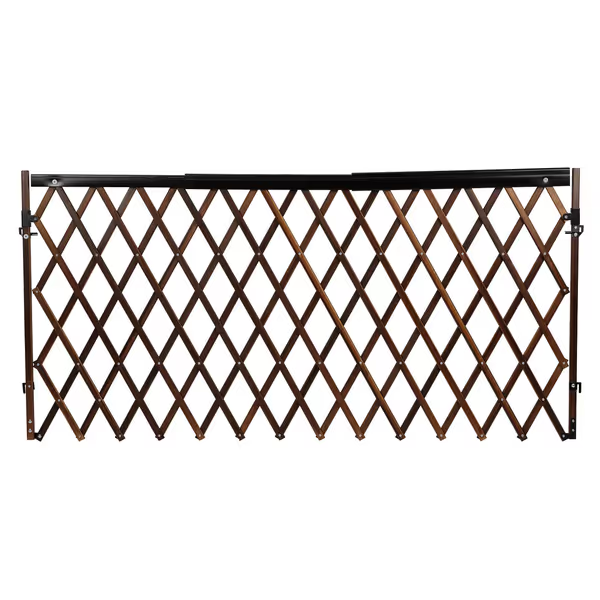
Evenflo Expansion Walk-Thru Room Divider Gate
Extra-wide, hardware-mount gate for large openings & high-traffic areas.
$54.99
Fits Openings24"- 60" wide (32" tall)
Fits Openings24"- 60" wide (32" tall)
Pros
Secure hardware-mount ideal for stairs & wide spaces.
One-hand latch, swings both directions for easy pass-through.
No pinch telescoping rail keeps fingers safe.
Cons
Mixed reviews on sturdiness for very determined pets.
Requires drilling for installation.
Easy to install and comes completely assembled. Works well for separating spaces and small dogs.
Easy to install and comes completely assembled. Works well for separating spaces and small dogs.
The Swing Direction Factor
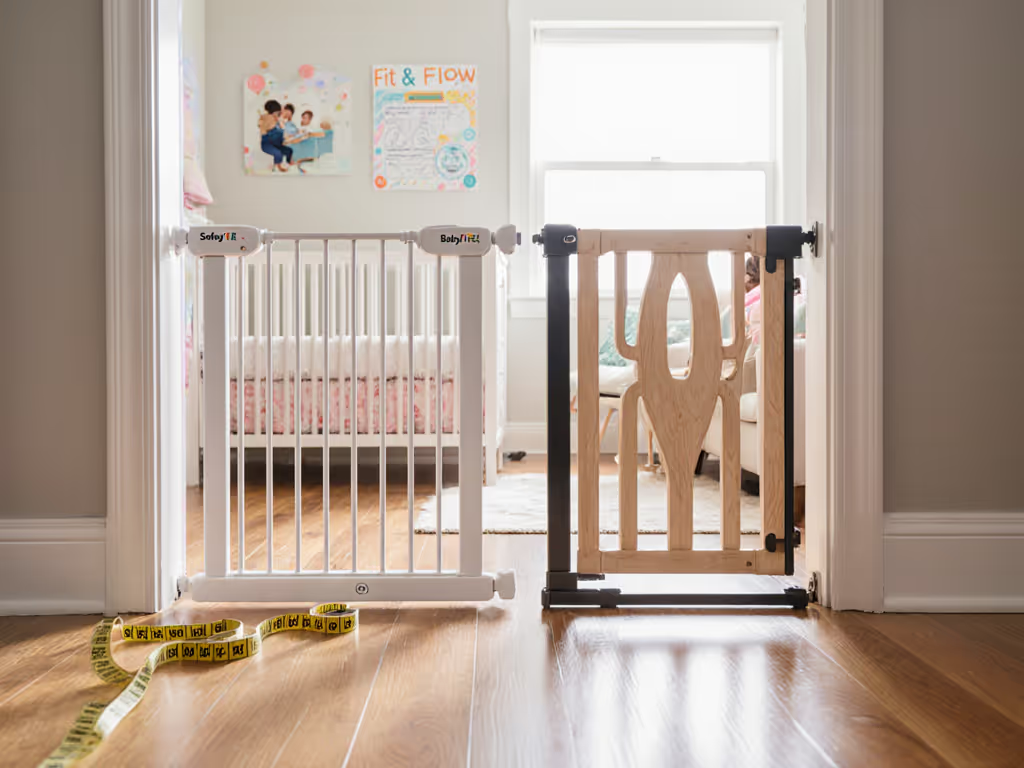
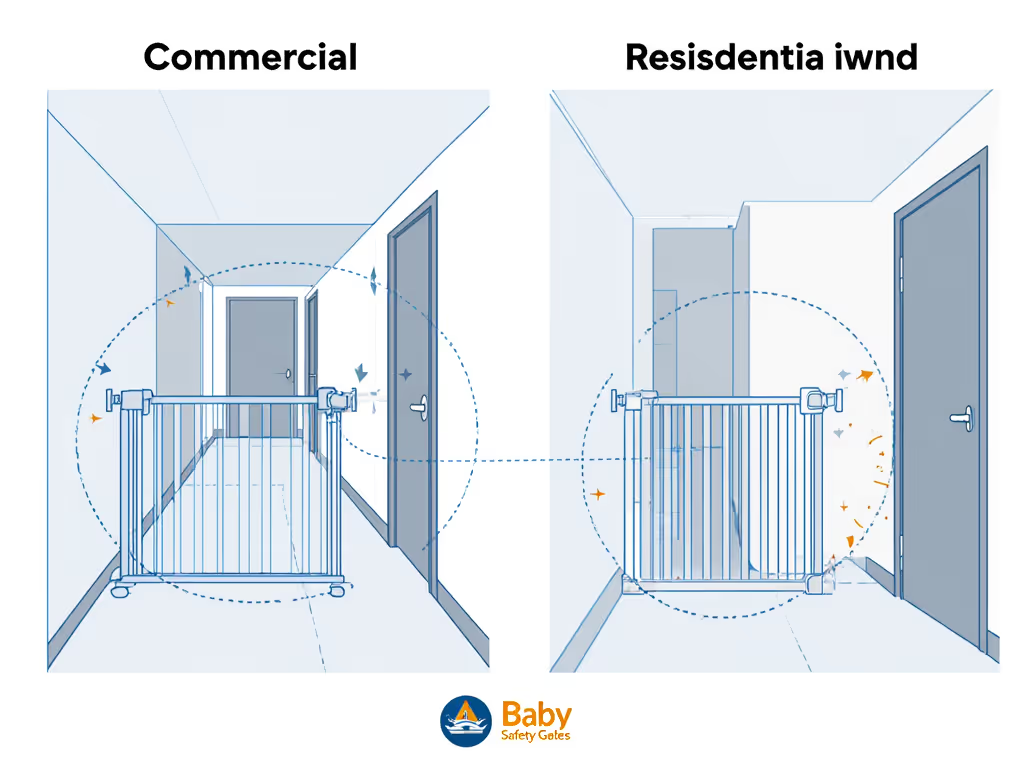
Few consider how swing arcs impact longevity. Commercial gates universally open toward high-traffic flow (e.g., into hallways), preventing toddlers from pushing against closing momentum. Residential gates often swing inward due to spatial constraints, creating destructive leverage on hinges. Observe the tension points in this diagram:
Smart Selection: When to Invest Like a Facility (and When Not To)
Critical Zones Demand Commercial-Grade
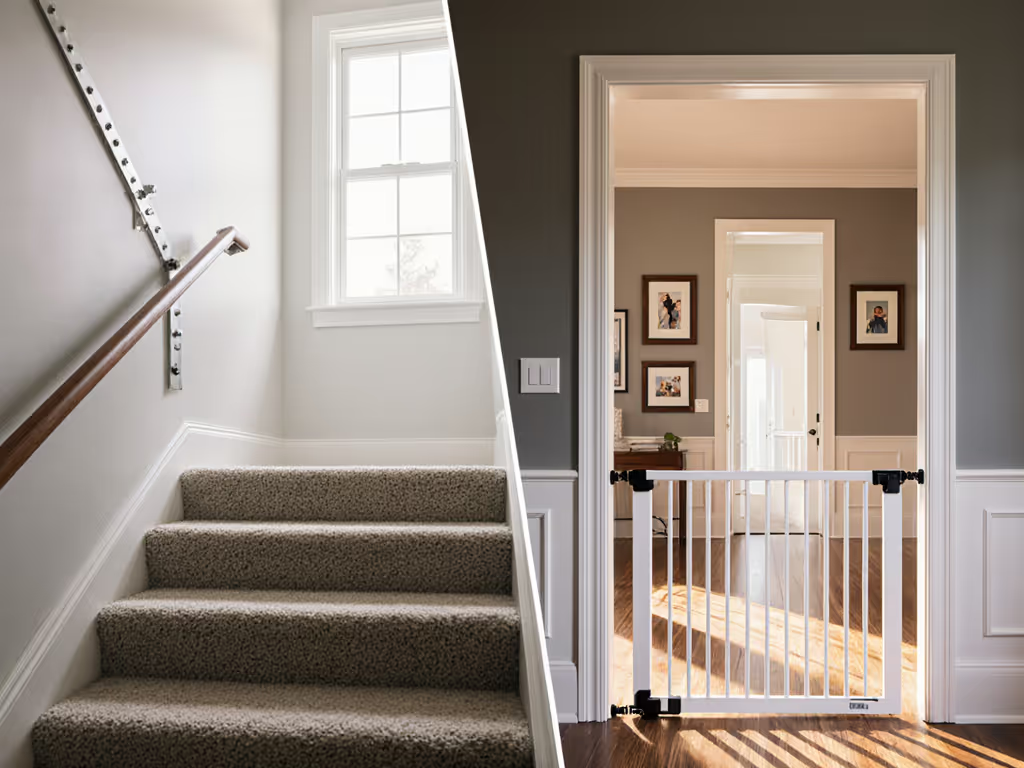
Top of stairs requires commercial-level durability regardless of setting. For measurements and the safest models, see our top-of-stairs gate comparison. That staircase where your toddler practices "parkour" sees more concentrated force than most daycare corridors. Opt for:
- Hardware mounting directly into studs or banister posts
- Gates with outward-swing prevention pins (like KidCo's Safeway)
- No bottom bars to eliminate tripping hazards
Transitional Spaces Allow Residential Refinement
Hallways and room dividers thrive with residential models if:
- Traffic stays under 20 daily crossings
- Pets won't test stability (e.g., cats but no large dogs)
- You can commit to quarterly tension checks
The Evenflo Expansion Gate excels here, its telescoping safety rail prevents finger pinching during adjustments, crucial for homes with multiple caregivers. But in a facility setting, its wood-composite frame would splinter under constant use within 6 months.
The Rental Compromise
Renters face unique hurdles. Get no-drill strategies and approved setups in our renter-proof baby gate guide. Instead of avoiding hardware mounts (which risks safety), use these pro techniques:
- Mount to banister posts instead of drywall
- Request spacers to cover screw holes during removal
- Choose matte finishes that hide minor wall scuffs
During my showroom days, I saw how a $5 tube of wall filler and matching paint smoothed over hardware gate removals, far cheaper than ER visits from gate failures.
Beyond the Gate: Building Sustainable Safety Routines
Durability isn't just about the product, it's about how seamlessly it integrates into daily choreography. A gate that requires two hands to latch or squeaks loudly will get bypassed, regardless of its strength rating. Compare decibel levels and quiet-latch picks in our baby gate noise test. Observe how commercial facilities place latches at 38-inch height: accessible for adults but out of reach for toddlers, enabling one-handed operation while carrying supplies.
At home, I help parents map this to their routines:
- Bedtime flow: Latches should face away from sleeping children to avoid noise
- Meal prep: Gates opening toward kitchens allow hands-free entry with plates
- Pet management: Position gates to block litter boxes but allow cat flaps
The most durable gate is the one you'll actually use correctly, every time.
Closing the Gap Between Safety and Serenity
Understanding the commercial vs residential baby gates divide prevents two common pitfalls: under-specifying for high-traffic home zones (like stair tops) or over-engineering for low-use areas (like guest bathrooms). Childcare facilities prove gates can be both invisible in design and invincible in function, but homes require nuance. Match gate durability to your actual usage patterns, not worst-case fantasies. Prioritize hardware mounts where stakes are highest, then invest in finishes that harmonize with your space. When safety recedes into the room's rhythm without demanding attention, that's when true peace of mind emerges. Explore CPSC's gate safety checklist to audit your current setup, and remember: the best gate isn't the shiniest, it's the one that works so well, you forget it's there.
Related Articles