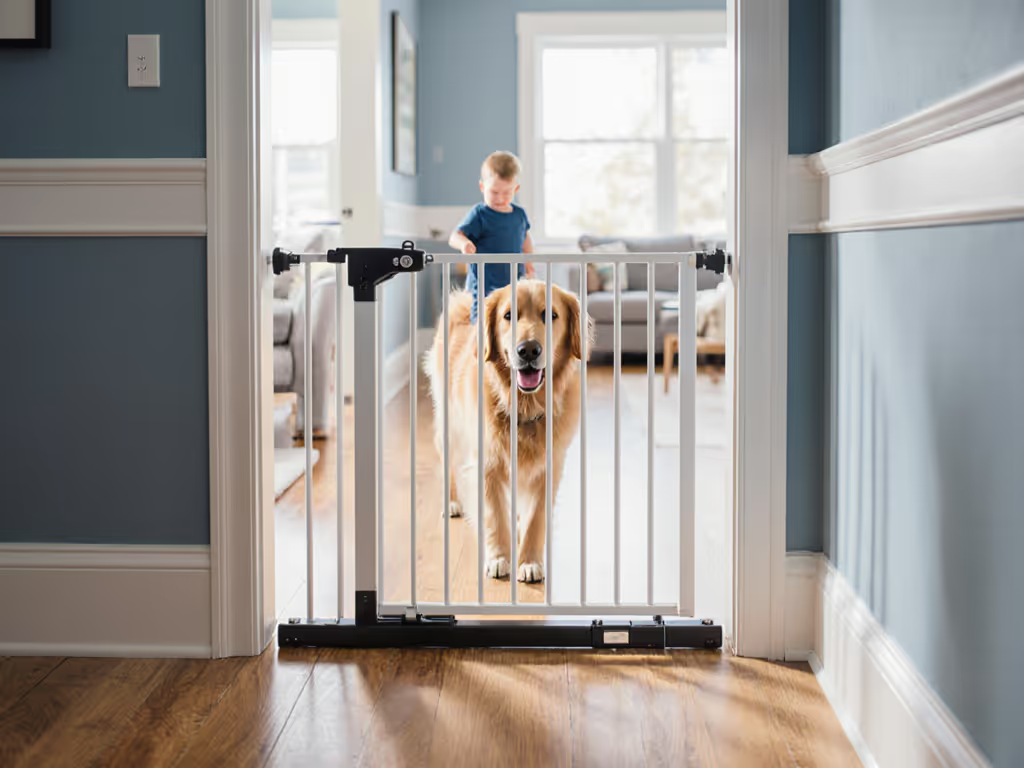
7 Best Baby Gates for Micro-Space Safety in Tiny Homes
By Casey Lin • 29th May
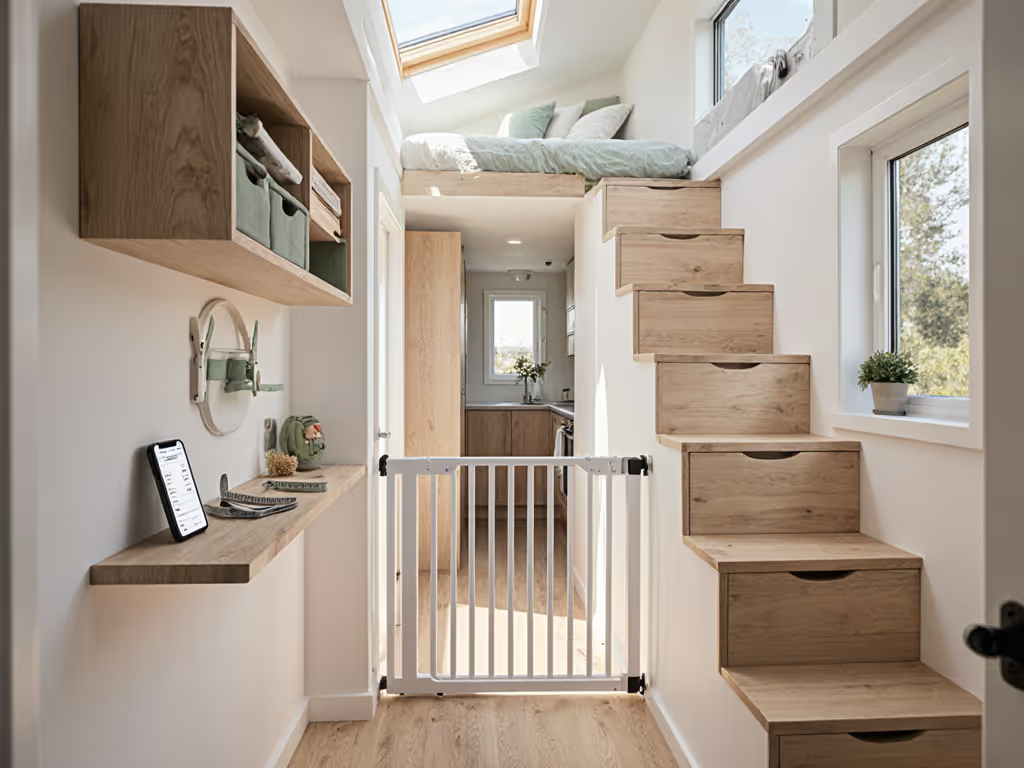
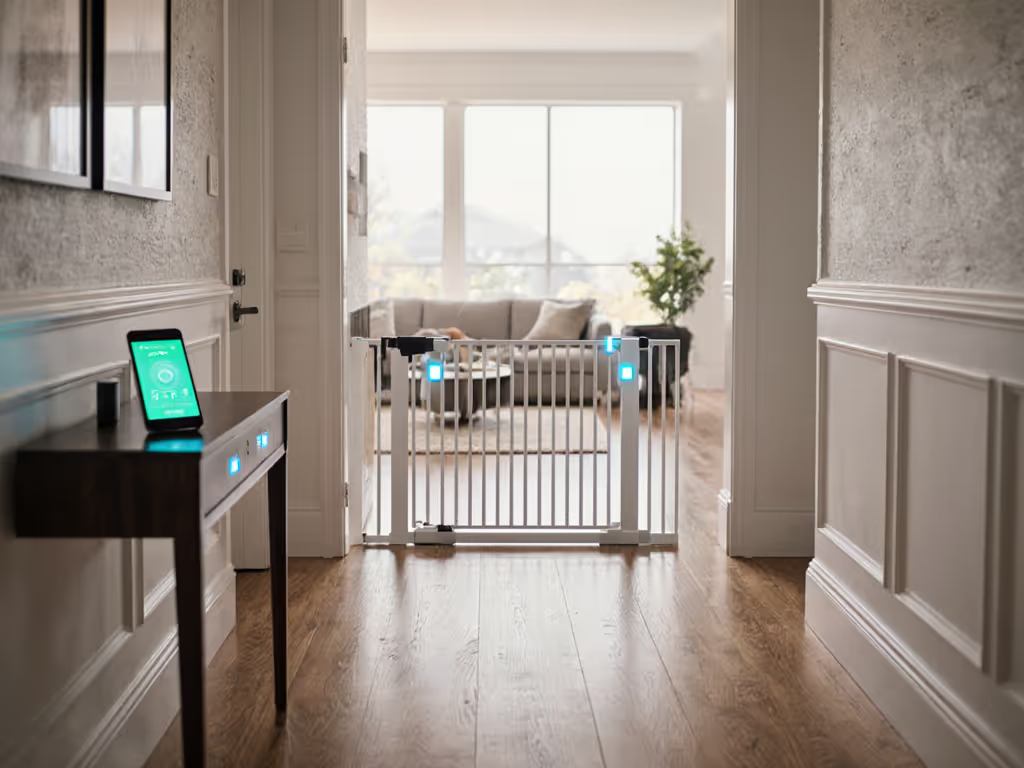
Tiny apartments, narrow hallways, and quirky staircases make choosing a baby gate feel harder than arranging the furniture. For product picks tailored to very small layouts, see our space-efficient baby gates for tiny homes. When you add rental walls, pets, and nap-friendly quiet to the mix, you need micro-space safety barriers that are slim, stable, and reversible, not generic gates that assume wide suburban openings.
Safe today, calm routines, deposit intact tomorrow, no drywall regrets.
Below is a space-first, data-informed guide to the 7 best gate types for tiny homes, plus how to match each to your exact measurements, wall types, and banisters.
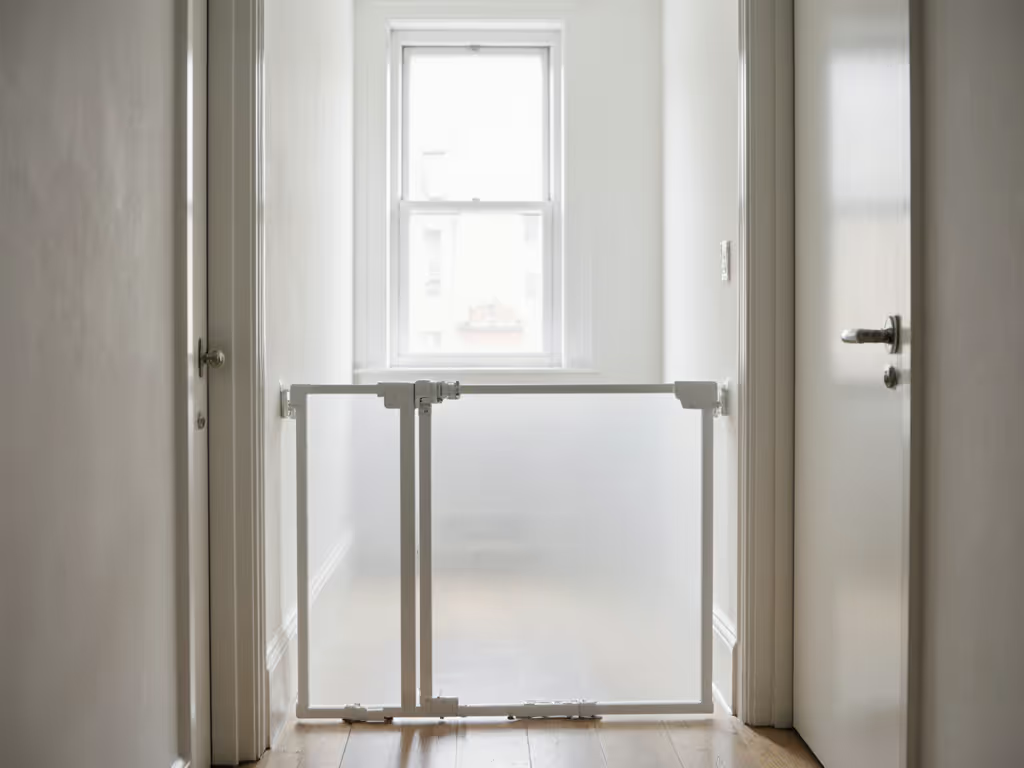
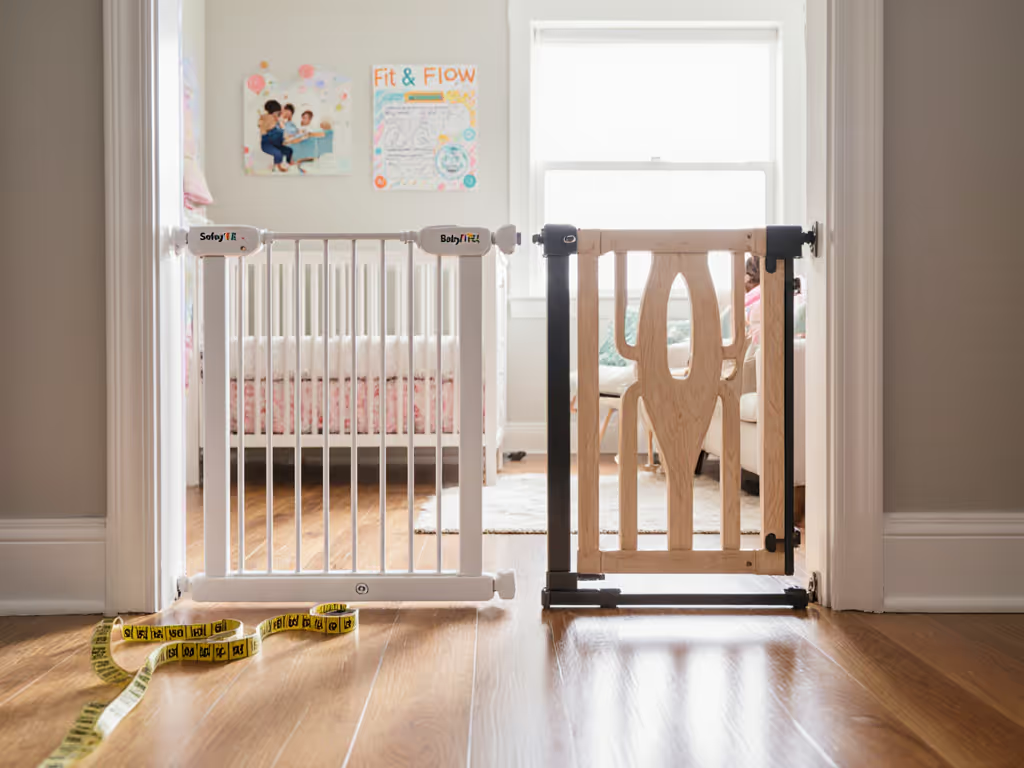
Before we dive into specific gate styles, grab a tape measure and note:
- Opening width at three heights: baseboard, mid-height, and near the top
- Height of baseboards or quarter-round (matters for gap at the bottom)
- Wall type: drywall over studs, old plaster, masonry, or metal framing
- Banister style (round wood, square, metal, glass) and whether you're allowed to drill
- Traffic flow: which direction you need the gate to open, and whether you can tolerate any threshold bar
Most safety experts recommend gates that are at least 30 inches tall and certified to ASTM or EN standards for young children, with vertical slats that resist climbing and small openings to prevent head entrapment.
--
1. Best for Narrow Doorways & Tight Hallways: Slim Hardware-Mounted Swing Gate
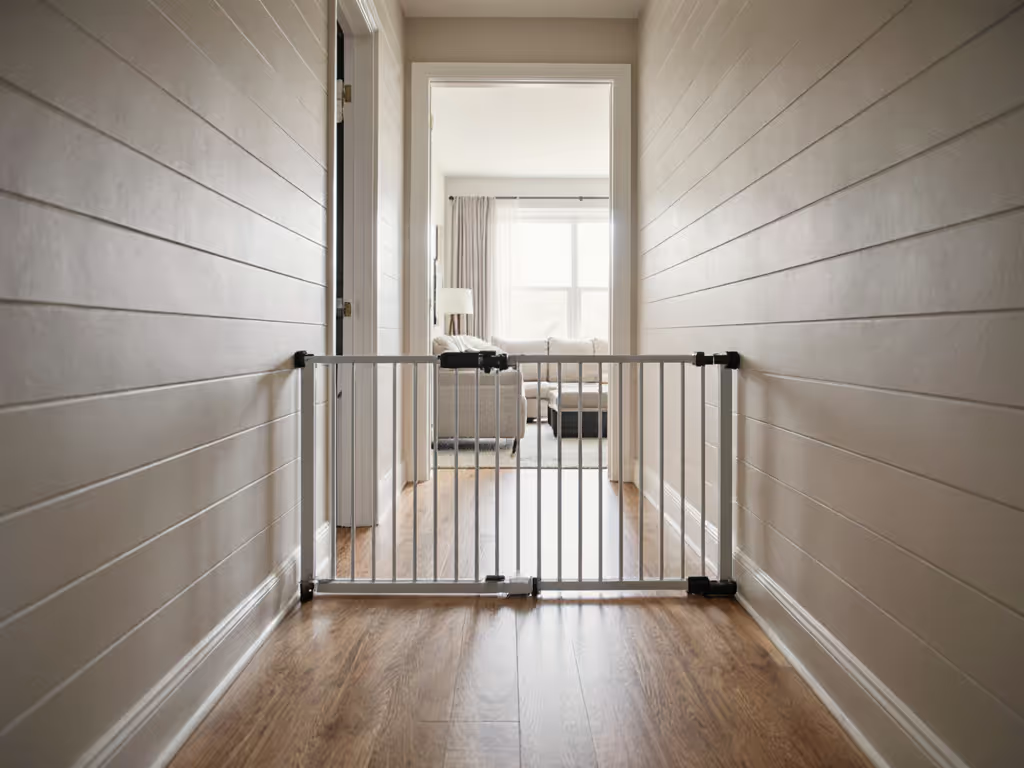
If you have a tiny hallway or a narrow kitchen entry you walk through 50 times a day, a hardware-mounted swing gate with no threshold bar is usually the safest, most efficient choice.
Why it works in micro-spaces
- Minimal footprint barriers: The frame mounts flush to the wall, and the door swings within the opening, not into your limited floor space.
- No floor bar to trip on (critical in tight corridors where adults carry babies, laundry, or hot food).
- Top-of-stairs safe when hardware-mounted into solid material and used per instructions.
Independent testing panels and major parenting publications consistently emphasize that top-of-stairs locations require hardware-mounted gates, because pressure mounts can be knocked loose and create fall hazards.
Ideal use cases
- Narrow apartment hallways leading to stairs
- Tight kitchen entrances where every inch of opening matters
- Tiny landings at the top of staircases (always hardware-mounted here)
What to look for
- Wall-mounted hinges and latch side with multiple screw points into studs or solid blocking
- One-hand open with a clear visual or audible lock confirmation
- Auto-close or self-closing hinges if family members tend to forget to latch
- Swing-direction control so it doesn't open over the stairs
Install checklist (renter-conscious)
- Locate studs on at least one side; if walls are old plaster, use proper anchors rated for dynamic loads, not flimsy plastic plugs.
- Mark bracket locations using painter's-tape templates to visualize swing space and height before drilling.
- On rental drywall, use the smallest hardware that meets the manufacturer's spec, and document the install (photos) for your own peace of mind.
- At move-out, you'll patch a few screw holes, but you've minimized risk where it matters most. Ask once, remove clean.
If you only splurge on one premium gate in a micro-home, this is usually where to invest: high traffic + high consequence.
--
2. Best for Renters in Ultra-Tight Doorways: High-Quality Pressure-Mounted Gate (Not for Top of Stairs)
For compact living childproofing in doorways and between rooms (not at the top of stairs), a sturdy pressure-mounted gate offers flexibility with minimal wall damage when paired with proper wall protectors.
Why it works in micro-spaces
- No drilling into walls or banisters, ideal for leases and short stays.
- Adjustable width with extension kits to match odd openings within a small footprint.
- Quick release: can be removed entirely when hosting or during move-out.
Multiple consumer tests show that higher-quality pressure gates, correctly tightened, resist pushing and stay aligned better over time than budget frames.
Critical safety caveat
Experts clearly advise against using pressure-mounted baby gates at the top of stairs, because impact or repeated leaning can dislodge them. Use them only in flat, low-consequence areas such as between rooms or at the bottom of stairs (if manufacturer allows) where a fall risk is lower.
What to look for
- JPMA or equivalent safety certification and clear labeling for allowed locations
- U-shaped frame with strong, non-slip pads and a wide tension range
- Walk-through door with one-hand latch (avoid step-over designs in tiny spaces)
- Optional auto-close and hold-open features to keep traffic flowing
Rent-safe install upgrades
- Use wall protector discs (sometimes called "wall savers") to spread force and reduce scuffing. These create a larger contact area and add grip.
- Check and re-tighten tension weekly; many gate instructions explicitly recommend routine checks as latches can loosen with repeated use.
For most micro-apartments, one strong pressure-mounted gate is the workhorse that divides "mess zone" from "toddler zone" without touching a drill.
--
3. Best Space-Maximizing Design: Retractable Mesh Gate for Flush Walk-Through (Not Top of Stairs)
Where every inch of swing matters, like a narrow galley kitchen, retractable mesh gates give you a nearly clear passage when open, a standout among space-maximizing gate designs.
Why it works in micro-spaces
- Foldable safety mechanisms: the mesh rolls into a slim side cassette, leaving no threshold bar or protruding frame.
- Works well on tight landings and around furniture that leaves no room for a traditional gate to swing.
- Often handles awkward widths within a defined range, especially when mounting outside the opening.
Safety considerations
Product testers note that retractable gates can feel less rigid under pressure and may not contain strong, determined toddlers as effectively as robust metal gates.
- Many manufacturers and experts recommend using retractables only in doorways or at the bottom of stairs, not at the top.
- Ensure the mesh fabric is tensioned fully and the latch is confirmed each time.
What to look for
- Top and bottom latching points for even tension across the mesh
- A quiet retract mechanism that doesn't snap back loudly during naps
- Clear locking indicator so caregivers can see at a glance if it's engaged
Install notes for tricky walls
- Mount into studs or solid framing where possible; if stud locations don't align, a slim mounting board painted to match the wall can bridge studs while keeping a tiny footprint.
- On plaster or masonry, use anchors rated for the gate's weight and dynamic load.
In very small, style-conscious spaces, a neutral mesh retractable gate can blend into the wall visually, keeping the home from feeling chopped up or cluttered.
--
4. Best Fold-Away Option for Multi-Use Micro Spaces: Hinged, Quick-Release Hardware Gate
If your living room is also your office, gym, and playroom, you may need a gate that's rock-solid when closed but folds flat against the wall when not in use.
Why it works in micro-spaces
- The gate folds back on itself along the wall, turning into a minimal strip instead of a constant barrier.
- Quick-release brackets let you lift the gate off its mounts entirely for deep cleaning or big gatherings, leaving only slim wall plates.
Safety testing consistently finds that hardware-mounted gates with solid hinges and latches maintain alignment better than large, always-pressured frames, especially over months of use.
Ideal use cases
- Studio apartments where the same path must be fully open for part of the day
- Grandparents' homes that host toddlers occasionally and adults the rest of the time
- Shared custody homes where you want modular, scalable solutions that adapt as routines change
What to look for
- One-hand operation and a latch that is intuitive for adults but not toddlers
- A hold-open function so you're not fighting the gate during chore bursts
- Finish options (white, black, wood) that blend with trim to reduce visual noise
Install checklist
- Map swing with painter's tape to ensure the folded gate doesn't block vents, doors, or furniture.
- Mount hinge side into a stud or strong blocking.
- If renters, talk to your landlord once, document the plan, and offer a patch-and-paint on exit. Ask once, remove clean.
This style is ideal when you crave containment during toddler chaos but want the space to feel fully adult-ready the rest of the time.
--
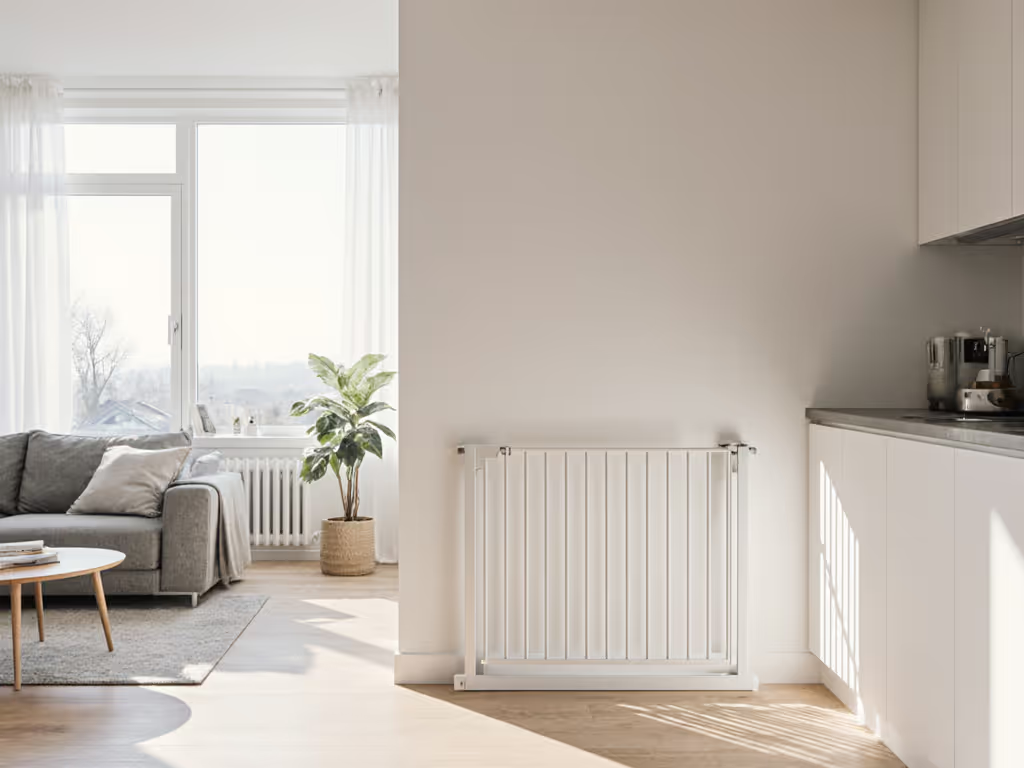
5. Best for Odd Corners & Open Tiny Lofts: Modular Freestanding/Wall-Mount Barrier
Some micro-homes have no clean doorway, just a stair opening in a loft, a weird angled gap, or an open-plan studio. Here, a modular panel barrier that can be freestanding or wall-mounted is often the only practical micro-space safety barrier. For adapters, extenders, and wall cups that solve odd angles and gaps, see our baby gate extensions guide.
Why it works in micro-spaces
- Multiple hinged panels let you snake around furniture, radiators, or support posts.
- Can form a semi-circle or angled run around a loft edge, fireplace, or TV stand.
- Many models allow one panel to act as a walk-through gate while others remain fixed.
Reviewers and testers find that freestanding barriers, when used according to manufacturer instructions and anchored where recommended, can provide flexible coverage, but they may not be as secure as firmly wall-mounted gates under heavy pushing.
Safety and stability tips
- For toddlers who love to push, use wall-mount kits at least at one end if allowed by your walls.
- Avoid placing the gate where a child could pull it onto themselves from a higher platform.
- Watch panel spacing and height; choose models clearly rated as safety gates, not just pet pens.
When to choose this over a standard gate
- Open loft edge with no true doorway
- Angled corridor where a straight gate would leave gaps
- Need to create a small "yes zone" play area in a studio apartment
In one of my own prewar walk-ups with crumbly plaster and a delicate banister, a clamp-on adapter plus a modular panel gave us a secure path to the stairs while keeping patching at move-out to two tiny holes and a twenty-minute removal.
--
6. Best for Narrow Stairs with Banisters: Hardware Gate + Banister Adapter Kit
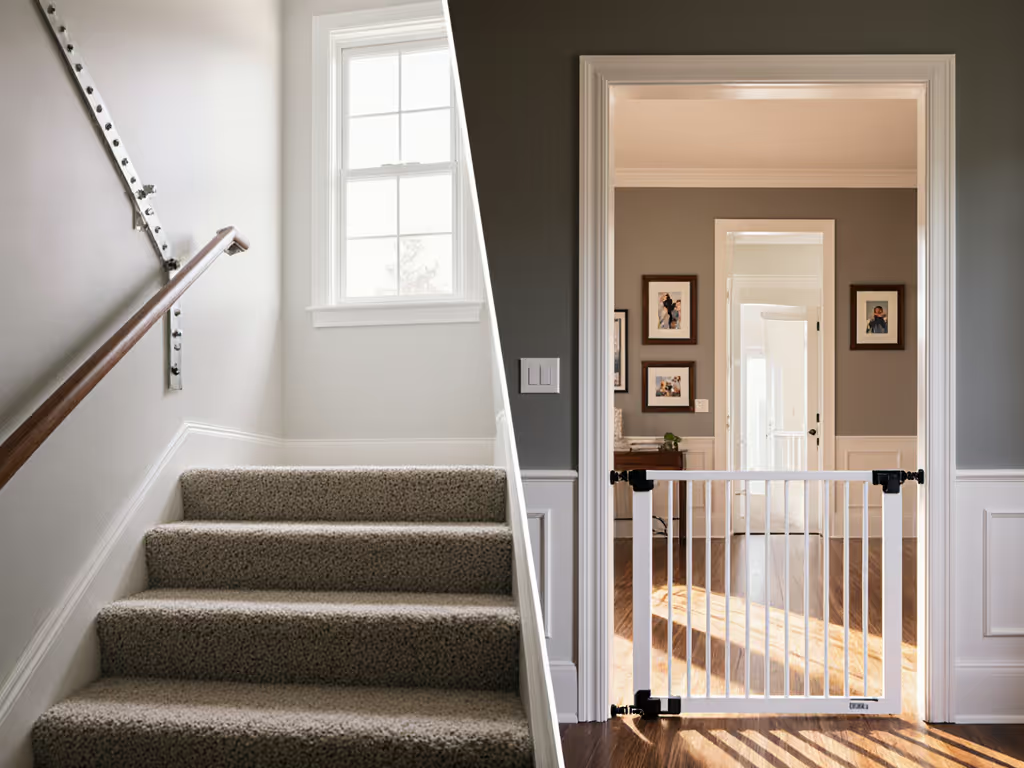
Stairs with wooden or metal banisters on one or both sides are a classic micro-space headache, especially when you can't drill into the railings. The safest middle ground is often a hardware-mounted baby gate paired with banister adapter clamps or sleeves.
Why it works in micro-spaces
- Lets you place a top-of-stairs-safe gate where you actually need it, even if only one side has a true wall.
- Clamps or straps wrap the banister post, presenting a flat mounting surface for the gate without screw holes in the railing.
- Some kits are slim enough for very narrow stair treads, preserving foot space.
Homeowner and parent discussions repeatedly highlight banister adapter kits as the go-to solution when you must avoid screw damage to stair posts, particularly in rentals.
What to look for
- Adapter kits rated for child safety gates, not just generic straps
- Non-slip pads that protect the banister finish (but avoid adhesives directly on varnished wood to prevent damage)
- A gate that is explicitly hardware-mountable and rated for top-of-stairs use
Install checklist (stairs)
- Confirm your gate is approved for top-of-stairs and that instructions address banister mounting.
- Attach banister adapters snugly at correct height; use a level to keep everything plumb.
- Mount the gate's hinge and latch to the adapter and/or wall per manufacturer torque specs.
- Set the gate to swing away from the stairs, and test with adult weight before allowing child use.
This setup is where I encourage parents to accept a few screw holes (in a wall or adapter board) in exchange for rock-solid security at the highest-risk edge in the home.
--
7. Best Travel and Multi-Home Option: Lightweight, Compact Fold Gate
For families shuttling between homes or visiting grandparents in small spaces, a lightweight, compact-fold gate avoids buying a full duplicate setup while still protecting key pinch points.
Why it works in micro-spaces
- Many travel-friendly gates collapse accordion-style or roll into a small bundle, tucking into closets without stealing precious storage.
- Works across multiple door widths via adjustable tension or straps, making it a flexible backup when you don't know exact measurements in advance.
- Ideal for grandparents or caregivers who want something safe but easy to stash away.
Testing labs note that portable and fabric-based gates can be sturdy when properly tensioned, but they often lack walk-through doors and may be more annoying to climb over in daily use. Get model-by-model pros and cons in our travel baby gates comparison.
Best uses
- Occasional overnights in small guest rooms
- Blocking off kitchens or bathrooms in relatives' homes
- Travel to Airbnb-style rentals where you can't drill
What to look for
- Clear width range that matches the most common openings you encounter
- Simple, repeatable tension mechanism with clear "locked" feedback
- Weight and packed size you can realistically carry with baby gear
When your micro-life spans multiple addresses, a travel gate offers peace of mind without permanent hardware in every location.
--
Next Steps: Building Your Micro-Space Gate Plan
To turn this into a calm, safe routine in your tiny home, follow a simple sequence:
- List your high-risk zones: top of stairs, kitchen, balcony-adjacent doors, bathroom.
- Measure each opening at three heights and note baseboards, wall type, and banister details.
- Map gates to risks:
- Top-of-stairs → hardware-mounted swing gate (with banister adapters if needed).
- Room dividers in flat areas → pressure-mounted or retractable gates.
- Odd openings/lofts → modular panel barriers.
- Multi-use or occasional spaces → fold-away hardware or travel gates.
- Decide where you'll accept minor screw holes (usually stairs and complex corners) and where you want fully reversible installs (pressure gates with wall savers).
- Create a short household "gate rules" card: how to latch, which direction to swing, when to use hold-open, and a reminder never to leave a pressure gate at the top of stairs.
With the right mix of space-maximizing gate designs, wall-conscious hardware, and clear routines, you can build a micro-home that feels open when you want it and secure when you need it, safe today, calm routines, deposit intact tomorrow.
Ask once, remove clean.
Related Articles