Safety 1st vs BabyDan: Your Complete Gate Comparison
By Casey Lin • 19th Feb
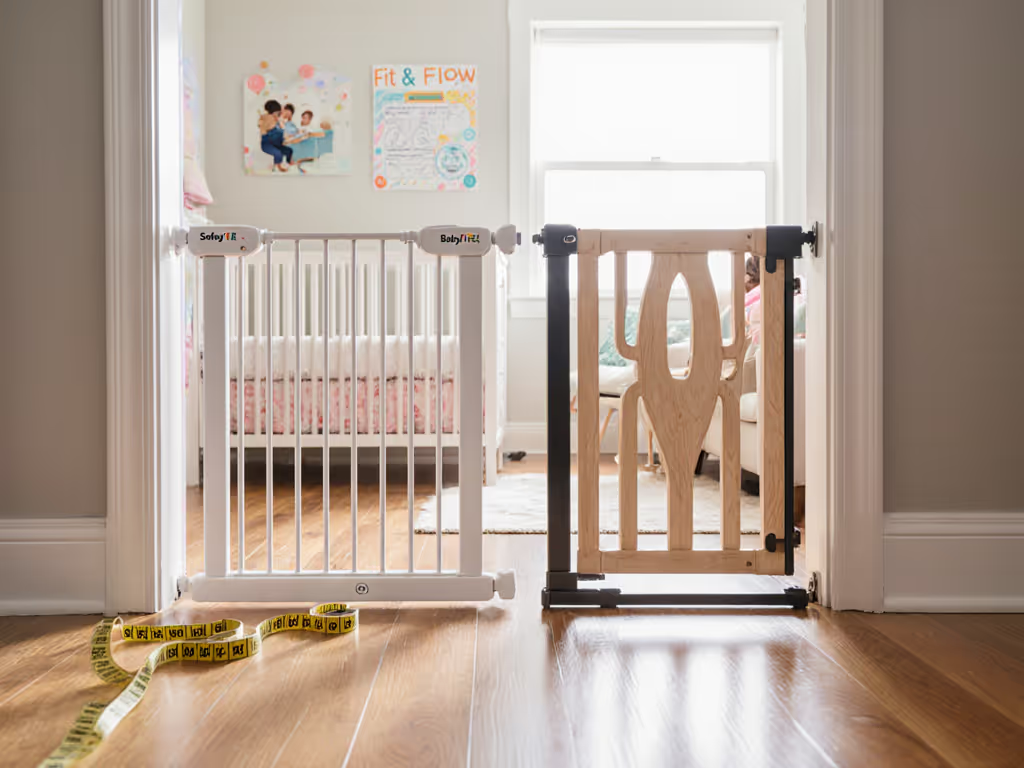
Choosing between Safety 1st vs BabyDan gates comes down to your space, installation comfort level, and whether your home is rented or owned. Both brands excel at different pressure-mounting scenarios, but they take distinct approaches to design, measurement flexibility, and renter-friendliness. This guide breaks down the real tradeoffs so you can match the right gate to your specific layout (whether that's a tight stairwell, a quirky banister, or an open-plan kitchen).
The Problem: Gate Choice Paralysis Is Real
You've measured your doorway three times. You've watched unboxing videos. You've read seventeen Amazon reviews from people whose walls are nothing like yours. Yet you're still frozen, because one gate costs $49.99 and another costs $99.99, and you can't tell if the extra $50 actually matters or if you're just paying for "premium branding."
Worse: you're a renter, or you have crumbly plaster, or your staircase is somehow both too wide and too narrow. You've heard horror stories about pressure-mounted gates pulling paint or leaving permanent marks. You've also heard that some hardware-mounted gates require drilling, which feels like a lease-violation time bomb waiting to explode.
The core question isn't really "which brand is better." It's which brand fits my walls, my budget, my timeline, and my deposit?
Why the Confusion Exists
Both Safety 1st and BabyDan make solid pressure-mounted and hardware-mounted gates. For a deeper dive into installation methods, see our pressure vs hardware-mounted guide. Both offer multiple models at different price points. But they package their features and measurement ranges differently, they use different terminology for installation indicators, and they've built their product lines around subtly different assumptions about your home.
Safety 1st skews toward breadth: multiple finishes, price tiers, and a tight focus on one-handed operation and quiet magnetic closers. You can find a Safety 1st gate at nearly any price point and in nearly any aesthetic.
BabyDan, by contrast, emphasizes precision measurement and integrated safety indicators. Their gates come with built-in pressure gauges or visual red-to-green indicators, and they're more prescriptive about which models suit which spaces.
This difference sounds small until you're standing in front of a 28-inch opening with baseboards and you need to know, with certainty, whether the gate will actually fit.
Breaking Down the Core Types
Pressure-Mounted Gates: The Renter's Default
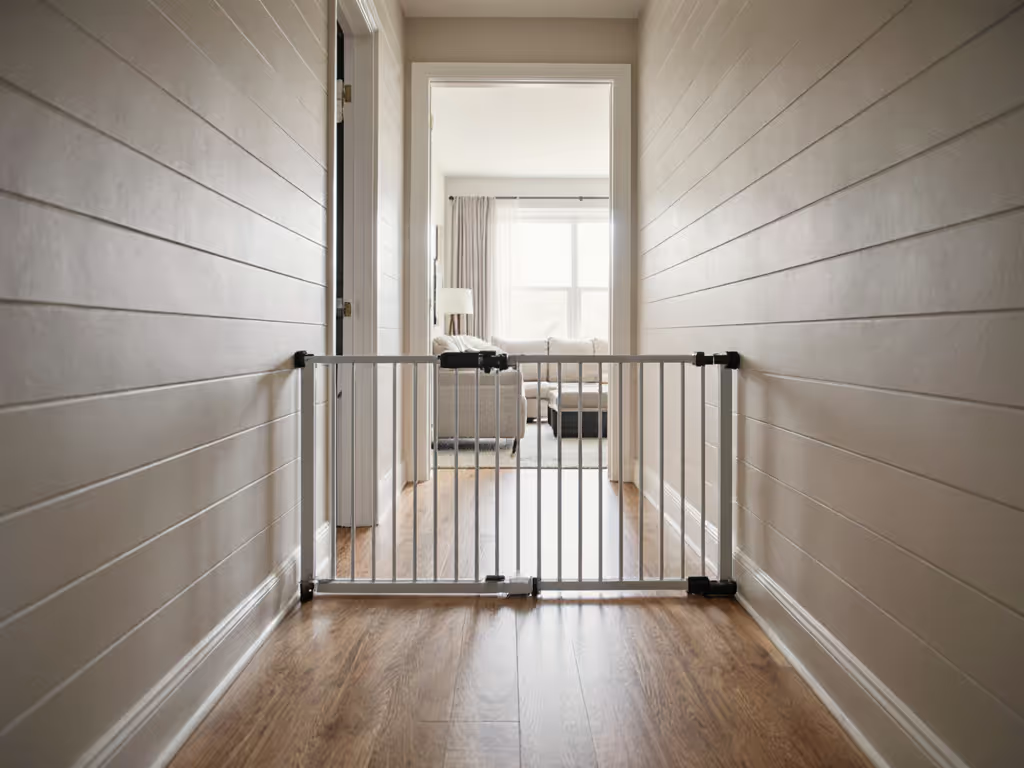
Pressure-mounted gates use tension between two walls (or a wall and a banister) to stay in place. No drilling, no anchors, no permanent marks if you use the right wall protectors and adapters. This is why they're the standard for renters and for anyone with delicate plaster, crumbly drywall, or a landlord who hasn't given explicit written permission to drill.
How they work: You measure the opening, adjust the gate width, and tighten the pressure bar until the gate is snug. Correct pressure is crucial: too loose and the gate fails, too tight and you risk wall damage or banister stress.
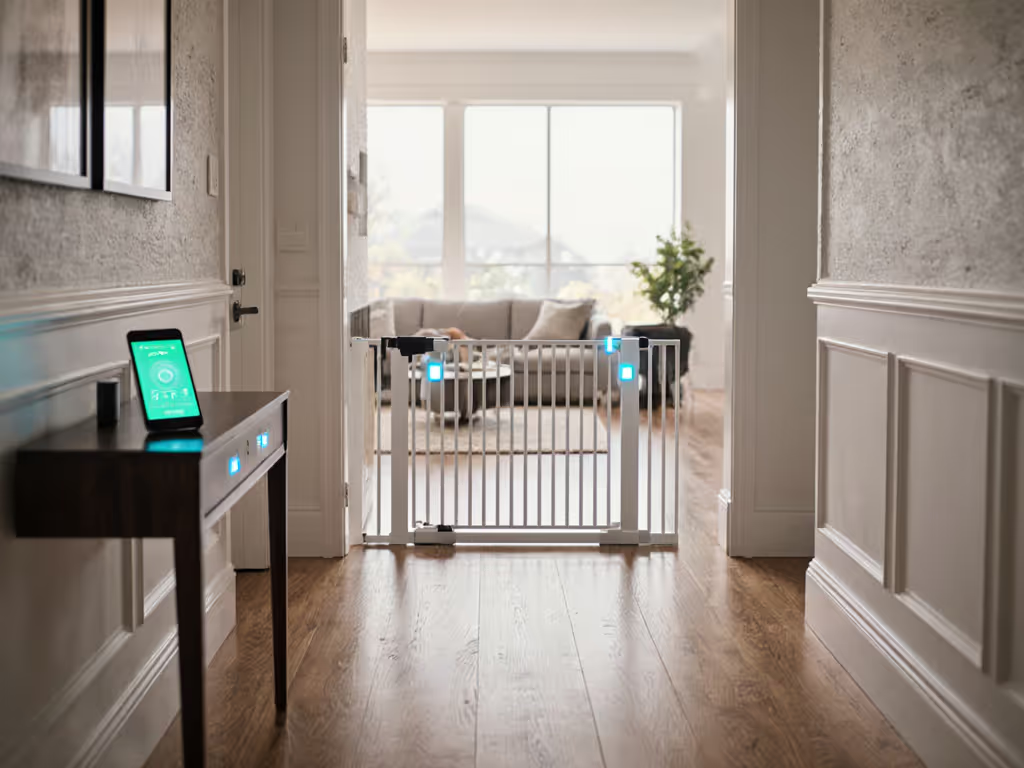
Safety 1st's approach: Most of their entry-level and mid-range models are pressure-mounted and ship fully assembled or nearly so. Many have the SecureTech® visual indicator, a red-to-green confirmation that the gate is correctly pressurized and latched. This is immensely helpful if you're mounting and remounting frequently or if multiple caregivers use the gate.
BabyDan's approach: Their pressure-mounted gates also have integrated safety indicators, but the method varies by model. Some use a fish-weight test (DesignerGate) or a precision tolerance system where the wall cup and spindle must be within 1 mm of each other (SlimFit, LISE). This precision requirement is a double-edged sword: it ensures safe installation, but it can be frustrating if your walls are slightly uneven.
Hardware-Mounted Gates: When You Must Drill
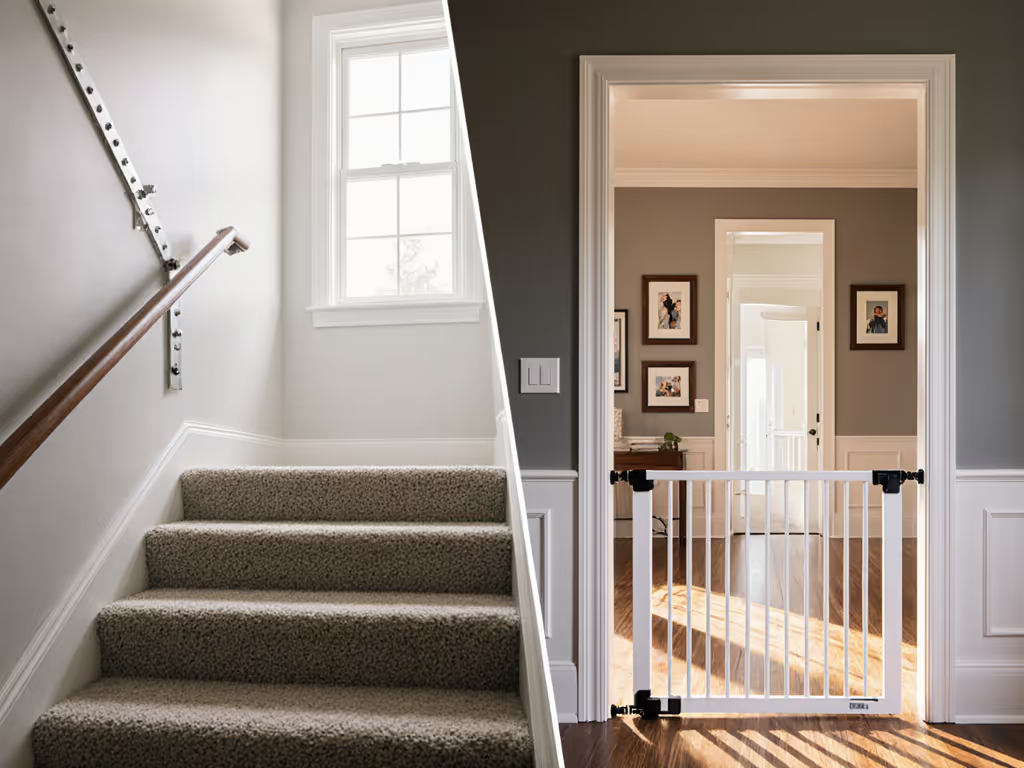
Hardware-mounted gates bolt directly into a wall stud or door frame using screws and anchors. If you're choosing a stair barrier, start with our top-of-stairs gate safety comparison for must-have features and measurements. They're stronger and more permanent, which makes them the gold standard for top-of-stairs installations, where a gate failure could mean a tumble. However, they require drilling, they leave holes, and they're not reversible without patching.
Important caveat: If you're mounting a gate at the top of stairs, pressure-mounting alone is not code compliant in most jurisdictions. Drilling is not optional. It is a safety requirement.
Safety 1st's hardware option: The Ready to Install Gate ($84.99) is their primary hardware-mounted model. It arrives fully assembled, swings both directions, and is explicitly rated for top-of-stairs use. No threshold bar means no tripping hazard for adults and older siblings.
BabyDan's hardware option: BabyDan doesn't heavily market a dedicated hardware-mounted gate in the same way; instead, many of their pressure-mounted models can also be installed with hardware if you add a mounting kit. This modularity is useful if your plans change, but it also means you need to purchase adapters separately.
Feature-by-Feature Breakdown
| Feature | Safety 1st Strength | BabyDan Strength |
|---|---|---|
| Pressure indicator clarity | SecureTech red-to-green is immediately intuitive; even babysitters understand it at a glance. | Integrated gauges are precise, but they require interpretation (fish weights, 1 mm tolerances). |
| Design variety | Farmhouse, modern, auto-close, swing-both-ways, broad range of styles and latching mechanisms. | Focus on clean Nordic design; fewer color/style variations but strong visual cohesion. |
| Measurement flexibility | Typical ranges: 29"-42" width; some models extend up to 47". | Ranges typically start at 28"-42"; extendable up to 79.6" (top end). |
| Price range | $39.99-$99.99; tight clustering around $64.99-$84.99. | Similar range, but direct pricing less transparent (varies by retailer and region). |
| Assembly & installation | Most models arrive ready to use; minimal setup. | Requires correct pressure reading and tolerance measurement; slower first install. |
| Material options | Metal (primary), wood, recycled plastic blends. | Metal (primary) and foldable plastic models; strong reputation for non-toxic materials. |
| Quiet operation | Auto-close models use magnetic latching (very quiet). | Sturdy manual latches (reliable but requires intentional closing). |
| Renter credentials | Good: pressure mounts are reversible. SecureTech gives renters confidence. Some models use spacers that protect against wall damage. | Good: precision measurement reduces wall stress if installed correctly. However, stricter tolerance requirements can frustrate DIY renters. |
| Top-of-stairs suitability | Not primary; Ready to Install is hardware-only exception. | Most models suitable at stairs (30 cm minimum from first step), but BabyDan Pressure Fit Gate not recommended at stairs due to threshold tripping risk. |
The Renter Angle: Why It Matters
Here's what the search results don't explicitly tell you, but I've learned the hard way: the difference between a $49.99 gate and an $84.99 gate often comes down to pressure consistency and wall protection.
Cheaper pressure-mounted gates can work fine in standard openings, but they often lack:
- Visual indicators that tell you when pressure is correct (you're guessing)
- Wall cups or spacers that distribute force and reduce dent risk
- One-handed operation (you're wrestling with a latch while holding a toddler)
If you're a renter, or if your walls are plaster or old drywall, spending an extra $15–$20 on a model with SecureTech® or integrated pressure feedback is worth it. For rental-specific strategies and no-drill options, read our renter-proof baby gate guide. It's the difference between confidently adjusting the gate three times without anxiety and worrying every time you tighten the pressure bar.
In our rent-stabilized walk-up, I used clamp adapters and painter's-tape templates to position a pressure gate between a delicate banister and crumbly plaster. When we moved eight months later, I removed it in twenty minutes, patched two pinpricks with spackle, and kept the full deposit. The key was matching the right gap protection and measuring twice with tape before any permanent mounting. Simple, reversible, and secure.
What Size Do You Actually Need?
This is where precision measurement becomes mandatory.
For Safety 1st: Measure your opening in multiple spots (walls are rarely perfectly parallel). Check for baseboards, quarter-round, outlet covers, or handrails that reduce usable width. Safety 1st gates typically specify the opening width they can span; compare this directly to your measurement, and add 1-2 inches of buffer for pressure adjustment.
For BabyDan: Measurement is more prescriptive. For example, BabyDan Premier minimum opening is 73.5 cm and maximum is 79.6 cm. If your opening falls within that range, the gate works; if not, you need an extension or a different model. This sounds restrictive, but it's actually a safeguard: BabyDan is telling you exactly which models fit your space, which reduces returns and frustration.
Assembly and Installation Speed
Safety 1st models are typically assembled or require minimal assembly (connecting the frame to the pressure bar). Most caregivers can install a pressure-mounted Safety 1st gate in 15-30 minutes, including wall protectors and initial pressure adjustment.
BabyDan models require slightly more precision. You must measure pressure carefully (especially for DesignerGate), and the tolerance specifications mean you might need to adjust multiple times. First install: 30-45 minutes. Subsequent adjustments: 10-20 minutes.
If you're a renter who anticipates moving or reconfiguring frequently, Safety 1st's speed advantage is real. It saves time and reduces setup stress.
Design and Aesthetic Integration
Safety 1st offers the broadest style range: modern farmhouse finishes, sleek white and gray metal, wood-tone options, and auto-close models that stay open when you prop them. If your home has eclectic décor or you want the gate to disappear visually, Safety 1st likely has a match.
BabyDan leans Scandinavian: clean lines, neutral colors (white, silver, black, natural wood), minimal industrial feel. If your home is minimalist or Nordic-inspired, BabyDan will integrate beautifully. If your home is farmhouse or transitional, you might need to compromise.
One-Handed Operation and Quiet Latches
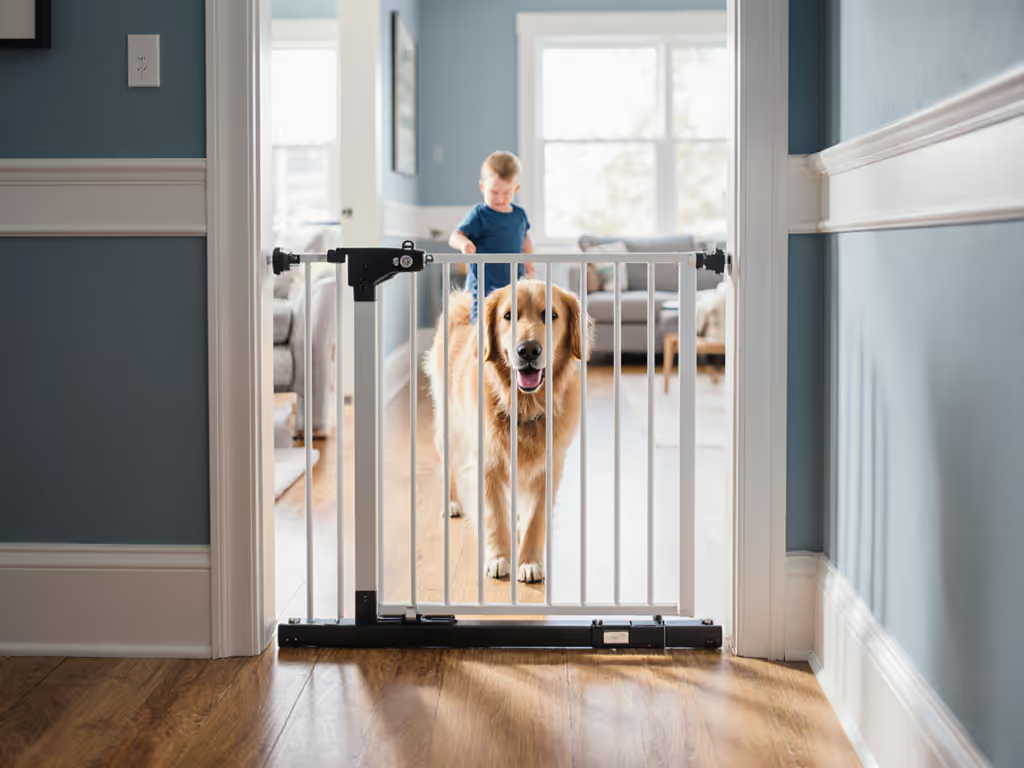
Both brands emphasize one-handed opening. Safety 1st's auto-close models use quiet magnetic latching, which is a genuine quality-of-life upgrade if you're managing a fussy baby or a dog while opening the gate.
BabyDan's latches are manual and sturdy; they're not noisy, but they require intentional two-handed operation in some models. For renters and multi-user homes (grandparents, babysitters), the simplicity is a strength, fewer components to break or confuse.
The Pet Factor
If you have dogs pushing against the gate or cats needing pass-through access, message both brands' support teams with your specific situation. BabyDan's foldable models (ALMA, Guard Me) offer flexibility for pet zones, while Safety 1st's broader product range means you're more likely to find a pressure-mounted option that works in odd configurations.
Making Your Decision: A Checklist
Use this to narrow your choice:
- Are you a renter or do you own? Renter = prioritize pressure-mounted with visual indicators (Safety 1st SecureTech or BabyDan integrated gauge).
- Are you installing at the top of stairs? Top of stairs = hardware-mounted (Safety 1st Ready to Install) or a different brand entirely. Drilling is non-negotiable.
- What's your opening width (inside measurement)? Use this to filter BabyDan models first (precision); then cross-check with Safety 1st ranges.
- Do you have pets? Pets = look for models with swing-both-ways or add-on extensions; BabyDan's foldable gates offer flexibility.
- Is wall protection a concern? Yes = choose a model with integrated spacers or wall cups; Safety 1st SecureTech models often include these.
- Do you value quiet operation or one-handed ease? Auto-close magnetic latches (Safety 1st) vs. sturdy manual latches (BabyDan).
- What's your design priority? Broad style range (Safety 1st) vs. Scandinavian cohesion (BabyDan).
- Will you move or reconfigure often? Frequent changes = Safety 1st for speed; stable setup = BabyDan for precision and durability.
Your Next Step: Measure, Then Match
Neither brand is objectively "better"; they're optimized for different contexts. Safety 1st excels when you want speed, variety, and intuitive installation indicators. BabyDan excels when you need precision measurement, durability, and a cohesive aesthetic.
Here's what to do right now:
- Measure your opening(s) in multiple spots using a metal tape (not a soft measuring tape). Write down the exact width, height, and any obstacles (baseboards, outlets, quarter-round, handrail diameter).
- Identify your installation type: pressure-only (doorway, room divider) or hardware-required (top of stairs).
- Check BabyDan's product pages first if you have a precise measurement; their range-based filtering will eliminate unsuitable models immediately. For model-by-model distinctions, see our BabyDan gate comparison.
- Cross-reference with Safety 1st's comparison chart for price, design, and feature alignment.
- If you're renting, prioritize visual pressure indicators and wall protectors. Spend the extra $15 for SecureTech or integrated feedback.
- Order one gate at a time. If it doesn't fit, return it and try the next size; shipping back gates is frustrating, but getting the fit wrong on an impulse buy is worse.
Renter-safe by default doesn't mean cutting corners on safety: it means matching the right pressure-mounted gate to your walls, using spacers and adapters to protect finishes, and knowing you can remove it cleanly. Both Safety 1st and BabyDan make that possible. Your job is picking the one that fits your space, your timeline, and your deposit peace of mind.
Related Articles