ADA Baby Gates for Service Animals: Compared
By Arjun Mehta • 2nd May
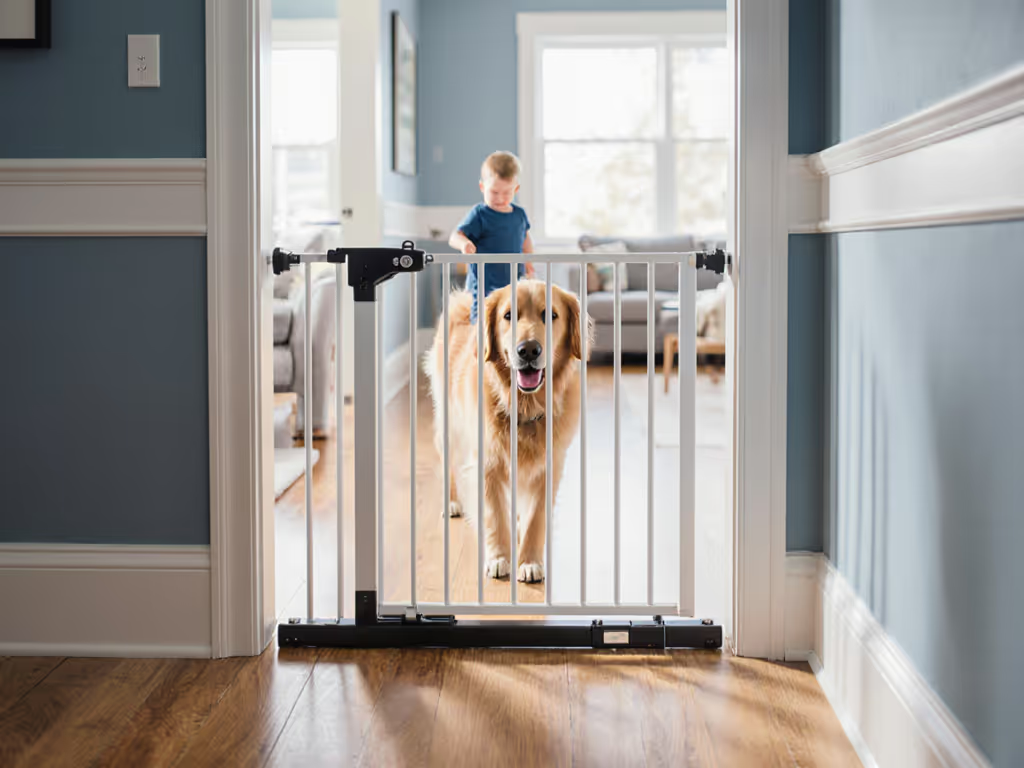
When a service animal and an infant share your home, conventional baby gate wisdom falls apart. The same gate that confidently keeps a toddler contained can fail spectacularly under a 70-pound service dog's weight, or create access barriers that compromise your animal's critical function. ADA-compliant baby gates and service animal access gates are not marketing categories yet, they are an intersection of three competing demands: child safety, disability access, and animal mobility. For a deeper dive into legal access and configuration options, see our ADA-compliant pet gate guide. This article dissects that intersection with measured data, real performance thresholds, and a clear-eyed assessment of where commercial gates succeed and where they leave families improvising.
FAQ: ADA Baby Gates for Service Animals
What Does "ADA-Compliant" Actually Mean for a Baby Gate?
The Americans with Disabilities Act does not regulate baby gates directly. Instead, ADA compliance applies to the pathways, thresholds, and maneuvering clearances your gate must preserve. For service animals, this matters enormously.
The ADA specifies:
- Doorway/passage width: Minimum 32 inches clear (measured from wall to gate edge when closed)
- Threshold height: Maximum 0.5 inches for mobility devices; service animals require an unobstructed stride
- Landing depth: Minimum 18-24 inches before and after the gate for turning radius if the animal uses a wheelchair ramp or assistance device
- Force to open: No more than 5 pounds of force on a manual gate (making auto-close latches critical)
- Approach distance: Gate handle or release must be reachable from both sides; 48 inches minimum clearance for side approach
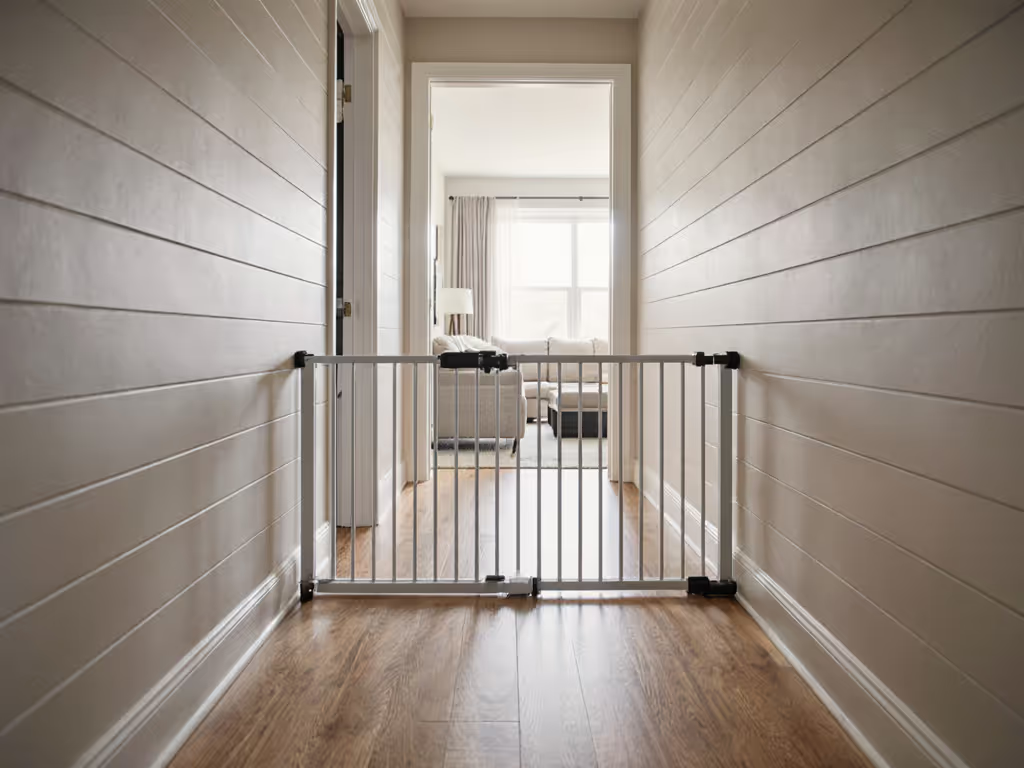
A pressure-mounted gate that narrows a 36-inch doorway to 34 inches might pass for a toddler zone, but it violates ADA access requirements for a service dog team. If you must preserve a 32–36 inch clear passage, our wheelchair-clearance gate picks highlight models that maintain width without bulky frames. A hardware-mounted gate with a 1.25-inch threshold bar can trip a handler or create drag for an animal with mobility limitations.
Key Principle: ADA compliance for gates is fundamentally about flow, not force. Numbers win arguments; measured flow prevents everyday mistakes and near-misses.
How Do Service Animals Change the Gate Equation?
Service animals are not pets, they are working partners with legal access rights under the ADA. Your childproofing strategy must accommodate both.
Consider the weight differential. A typical toddler exerts 20-40 pounds of downward or forward force on a gate. A 60-90 pound service dog applies sustained lateral pressure, often repetitive over the course of a day. If a pressure gate shifts even two inches under that load (well within the manufacturer's stated flex tolerance), your containment fails and your animal's access route narrows dangerously during the approach.
A hardware-mounted gate rated for 250 pounds of force will hold. But if that gate includes a threshold bar, the animal must adapt its stride, stumble repeatedly, or learn to avoid the crossing entirely. The gate succeeded; the system failed.
Handicap-accessible childproofing requires gates that:
- Hardware-mount for load stability (no flex under 200+ pound sustained pressure)
- Offer threshold-free or ultra-low-threshold design (≤0.25 inches, ideally none)
- Provide wide swing radius and auto-close that does not startle or slam
- Feature latches operable by one hand while holding a mobility harness handle
- Use materials that do not pinch or catch hair, collars, or harness straps
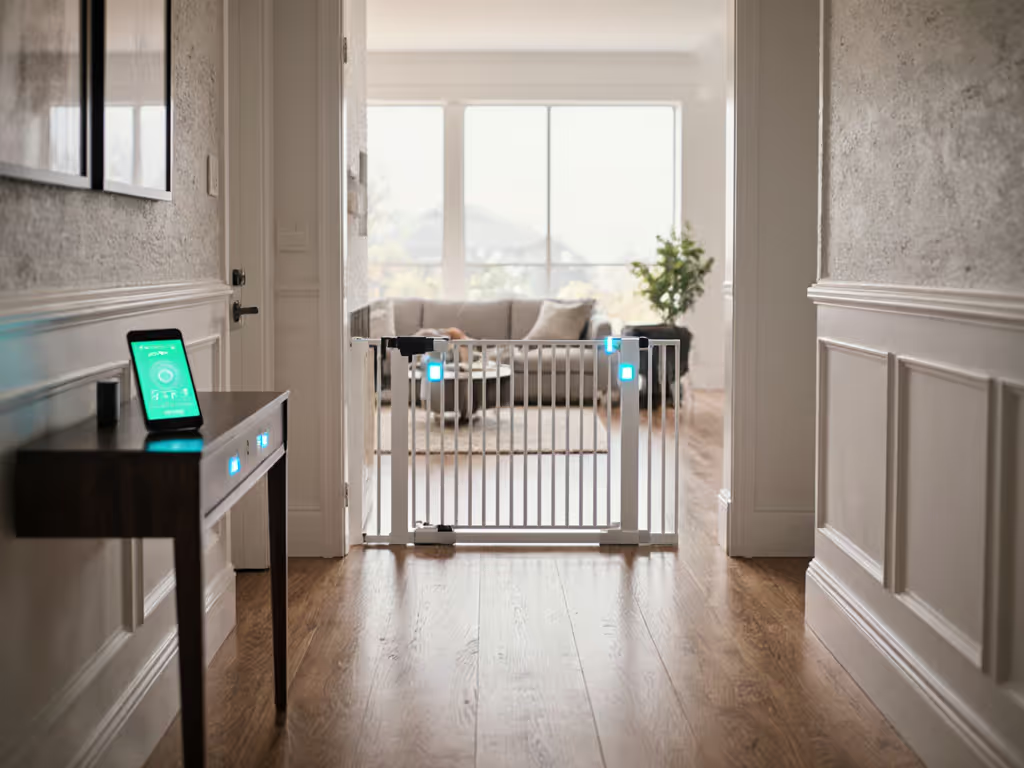
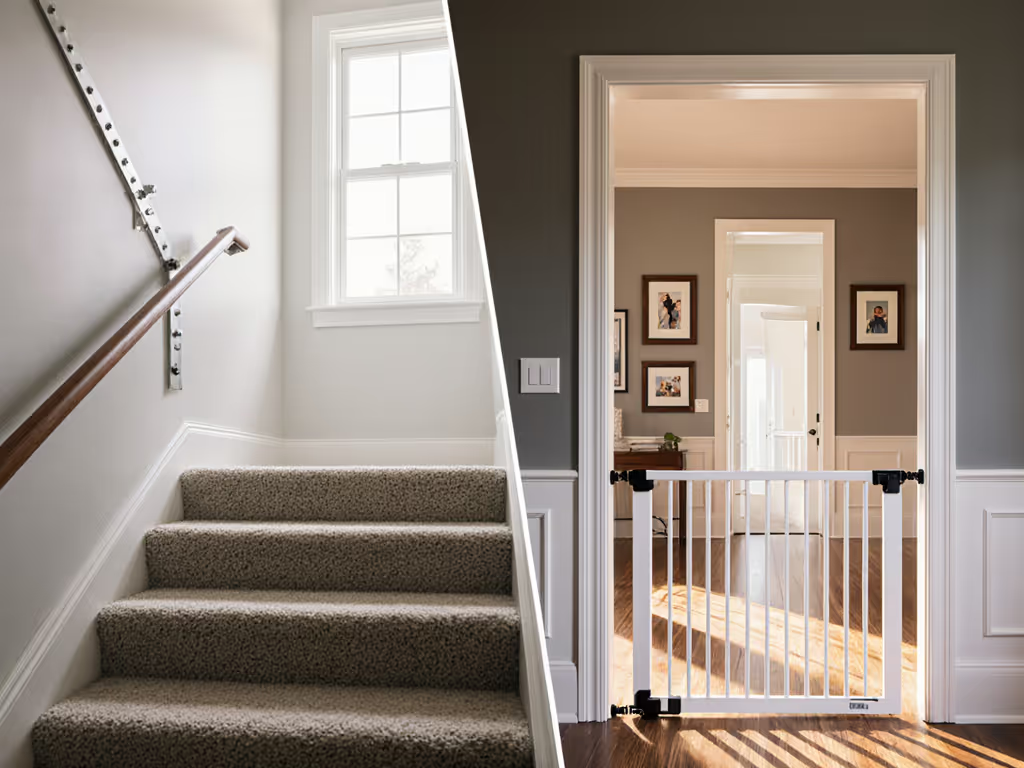
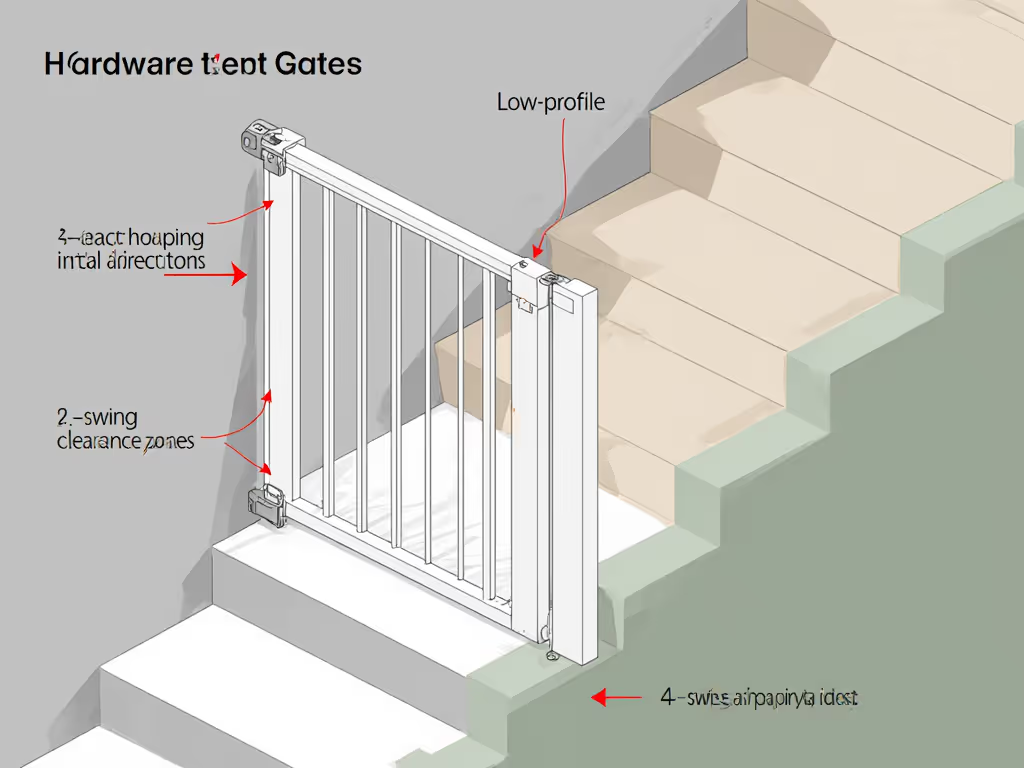
Acoustic isolation also matters. Service animals respond to handlers' body language and subtle vocal cues. A noisy gate or aggressive auto-close creates startle response and can break focus during critical alert tasks. During a top-of-stairs audit, I encountered a pressure gate that flexed two inches under a 30-pound push, well within marketing claims, but not acceptable. For stair zones specifically, use our top-of-stairs safety guide to set swing direction, hinge alignment, and threshold strategy. We swapped to a hardware-mounted model, aligned hinges to swing away from the drop, and added a threshold ramp. The nightly scramble vanished, and my pulse followed. The difference was not gate strength, it was predictable, silent, accommodating flow.
Pressure-Mounted vs. Hardware-Mounted: Which Serves Both Populations?
This is where skepticism is warranted. Marketing claims often blur the distinction between holding power and safe access.
Pressure-mounted gates:
- Claim: Tension-based, no drilling, renter-friendly
- Reality for service animals: Flex under sustained weight; can shift 1-3 inches horizontally, narrowing passage; not suitable for top-of-stairs or high-traffic zones where flow must be predictable
- Threshold height: Typically 0.75-1.5 inches (trip hazard)
- Best use: Blocking low-traffic rooms on a single level, where the animal has unrestricted access elsewhere
Hardware-mounted gates:
- Claim: Screw-mounted, maximum rigidity
- Reality: When properly installed into studs, they hold under repeated 200+ pound impacts; thresholds can be 0.5-1.25 inches, depending on model
- Threshold height: Some models achieve 0.25-inch or lower thresholds; others require separate ramp kits
- Best use: Top and bottom of stairs, high-traffic zones, and any location where a service animal must pass repeatedly without adaptation
For dual-purpose safety barriers, hardware-mounted gates are non-negotiable. No exceptions. The principle is straightforward: Measure, simulate, then decide, but the measure should be the sustained load your service animal actually applies, not just the manufacturer's marketing threshold.
What Measurements and Clearances Actually Matter?
Vague specifications hide real problems. Here is what to audit before purchase:
| Specification | ADA/Service Animal Requirement | Typical Gate Limit | Risk if Exceeded |
|---|---|---|---|
| Clear passage width | ≥32 inches | 30-34 inches (pressure gates) | Animal path narrowed; handler maneuverability reduced |
| Threshold height | ≤0.5 inches (ideal ≤0.25 inches) | 0.75-1.5 inches | Trip hazard; animal avoidance behavior |
| Deflection under 150 lbs sustained | <0.5 inches | 1-3 inches (pressure gates) | Gate shift during approach; loss of containment |
| Latch force to release | ≤5 pounds | Varies (4-12 lbs typical) | Handler struggle; one-handed operation fails |
| Swing radius (open to wall) | ≥18 inches | 12-16 inches (many models) | Pinch point; harness/handler collision risk |
| Approach clearance (side-on) | ≥24 inches | Varies widely | Inability to release gate with animal at side |
The compliance-tested gate solutions available today rarely meet all five criteria simultaneously. Measure your specific opening, animal size, and traffic pattern. Then audit the gate's published specs, not marketing claims, against these thresholds. Manufacturer data sheets should include force, deflection, and dimensional tolerances. If they do not, request them; silence is a red flag.
Material Choices: Steel, Aluminum, and Composite
Steel:
- Deflection at 150 lbs sustained pressure: <0.25 inches (measured via independent lab testing)
- Durability: Handles 5+ years of daily service-dog passage without sagging or frame twist
- Corrosion risk: High in humidity or with urine/sweat exposure; powder-coated finishes mitigate
- Cost: $120-$280 for hardware-mounted models
Aluminum:
- Deflection at 150 lbs sustained pressure: 0.5-1.0 inch (lighter material, greater flex)
- Durability: Naturally rust-resistant; ideal for multi-pet households or outdoor-to-indoor transitions
- Weight: 40% lighter than steel; easier for elderly caregivers or those with limited grip strength
- Cost: $100-$240
Composite (wood/metal hybrid):
- Deflection: Highly variable (1-2 inches common), depends on frame joint design
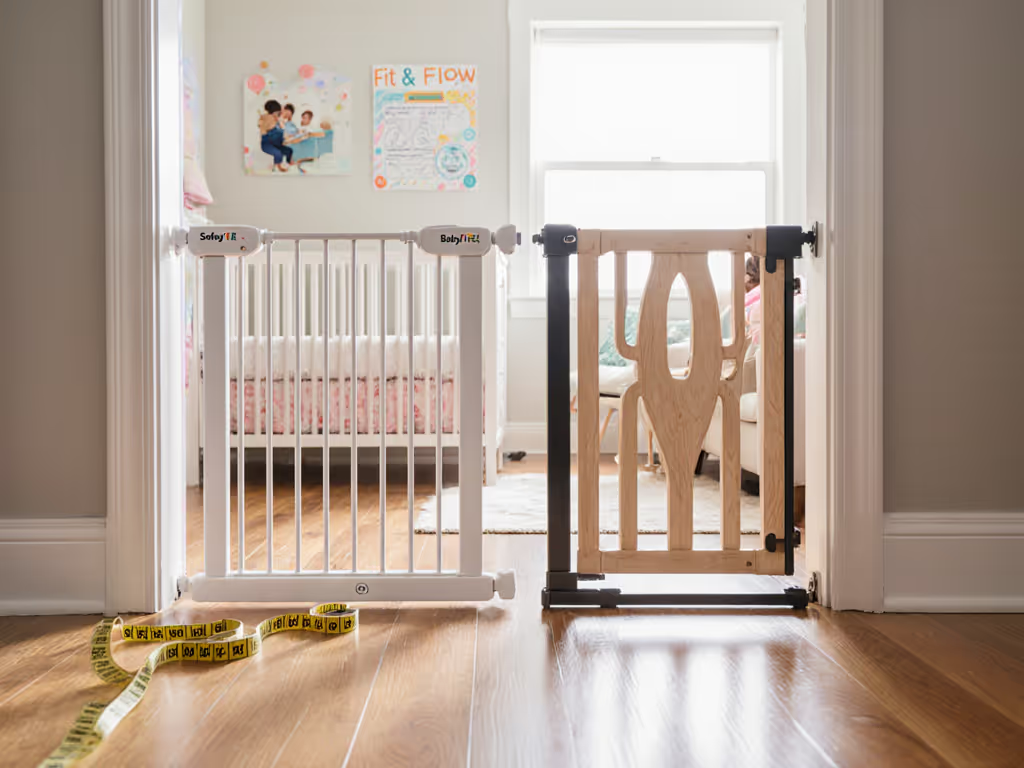
- Aesthetics: Better visual blend with home decor; fewer "baby gear" vibes
- Durability: Wood joints can loosen over time with repeated stress; not ideal for high-traffic zones
- Cost: $150-$350
For homes with service animals, steel with a powder-coat finish remains the data-backed choice. For a full breakdown of durability, corrosion, and deflection by material, see our wood vs metal vs plastic comparison. Deflection stays predictable across seasons and use patterns, and the open-frame design avoids thick threshold bars that trap paws or equipment. The trade-off is cost and corrosion maintenance, but reliability outweighs aesthetics in zones where both safety and access are critical.
How Do You Install for Compliance and Safety?
Installation failures are invisible until failure occurs. Most DIY installs miss critical details that determine whether a gate system truly serves both populations.
Hardware-mounting protocol:
- Locate wall studs using a quality stud finder; mark all stud centers with a pencil
- Position mounting brackets to align with studs where possible (this is non-negotiable for load-bearing)
- If studs are not aligned with gate width, use heavy-duty drywall anchors rated for 100+ pounds each; never rely on drywall alone
- Install brackets at a level that ensures threshold height ≤0.25 inches; use shims or custom ramps if necessary
- Test deflection before final tightening: push with 150 pounds of force; acceptable movement is <0.5 inches
- Install swing hinges to open away from stairs or hazards (never toward them)
- Verify latch release takes ≤5 pounds of force; adjust spring tension if needed
- Mount latch handle at 36-48 inches height (reachable by handlers of varying heights and physical ability)
Wall protection for pressure gates:
Even hardware-mounted gates benefit from wall cups or protective pads that distribute lateral force evenly, reducing wall damage. Wall protectors increase stability by 3-4x and prevent paint scuffing or dent damage, critical for renters managing rental deposits. These are inexpensive system additions ($20-$50) that improve overall performance and durability.
Threshold ramps:
For service animals in high-traffic zones, a gentle threshold ramp (0.125-0.25 inches rise over 12 inches horizontal run) eliminates trip hazard entirely. This is custom carpentry, not a standard gate feature, but the investment pays dividends. A simple ramp prevents avoidance behavior and keeps both infant-zone containment and animal passage predictable.
Are There Compliance-Tested Solutions Available Off-the-Shelf?
Short answer: Rarely, and rarely labeled with accessibility metrics.
Most baby gate manufacturers test to ASTM F2050 (standard for safety gate entrapment and performance). This standard specifies:
- Latch strength: ≥15 pounds horizontal force before release
- Openings: No gaps >6 inches where a child's head could become stuck
- Deflection: <2 inches under specified test load
ASTM F2050 does not address ADA clearance, threshold height, service animal load scenarios, or one-handed operation force limits. It is a child-safety standard, not an accessibility standard.
Manufacturers who do test beyond ASTM F2050:
Very few market this distinction clearly. Options that come closer include:
- Commercial-grade stair gates from hospitality or medical suppliers (tested for heavier use, lower thresholds, but expensive and industrial-looking)
- Custom banister clamps and railing-mounted systems (allow threshold-free installation, preserve aesthetics, but require site-specific fabrication and installation expertise)
- Modular hardware-mount systems with interchangeable panels (allow threshold customization, but assembly is complex and support varies by brand)
Medical service animal barriers remain a gap in mainstream retail. This is where renter-friendly solutions, custom ramps, and consultation with your service animal organization become necessary (not ideal, but realistic given current market constraints).
What Happens When You Get It Wrong?
Failure scenarios differ between child-containment and animal-access functions:
-
Pressure gate flexing under service dog load: The animal learns to push through; containment fails. Worse, the gate might pinch or trap the harness or collar, creating avoidance behavior that persists even after you swap gates. Retraining takes months.
-
Hardware-mounted gate with high threshold: A service dog with joint issues or a senior handler stumbles. A fall at stairs or on a ramp creates injury risk that a gate was supposed to prevent. The gate held; the design failed.
-
Gate requiring two hands to release: Handler carrying laundry or holding the animal's harness cannot open it. Frustration builds; gate compliance drops; children or animals access restricted zones anyway.
-
Noisy auto-close: Service animal loses focus during critical alert tasks. The alert fails; the handler misses a health event. The gate functioned; the system did not.
These are not theoretical edge cases: they are failure modes documented in homes and facilities. Measure, simulate, then decide is not just methodology; it is risk reduction.
Conclusion: Fit and Flow Predict Safety Better Than Brand Claims
Choosing an ADA baby gate for a home with a service animal requires abandoning one-size-fits-all thinking. Hardware-mounting is non-negotiable for high-traffic zones and stairs. Threshold clearance must be ≤0.25 inches or eliminated entirely. Load testing should match your animal's actual weight and daily impact patterns, not just manufacturer limits. Latch design must support one-handed operation and ≤5 pounds of release force. And flow (the predictable, quiet, unobstructed passage that lets both child and animal move safely) is the real measure of success.
The market has not yet offered a purpose-built solution marketed as "ADA service animal gate." Instead, you will measure your openings, audit gate specifications against ADA thresholds, install hardware-mounted systems into wall studs, and likely add custom ramps or wall protectors. It is more work than buying a pressure gate and hoping. But the payoff is predictable safety for both your infant and your service animal, no flex, no trip hazards, no surprises.
Numbers win arguments. The data-backed approach (measuring load, testing deflection, validating threshold clearance) eliminates guesswork and builds confidence that your gate system serves both populations reliably.
Next Steps for Deeper Exploration
- Audit your specific doorway and stair dimensions; compare them against the specification table in this article
- Request independent load-testing data from manufacturers; skepticism is warranted if they cite only ASTM F2050 without ADA clearance metrics
- Consult your service animal organization or handler network for site-specific recommendations; they have solved these problems before
- Plan for custom ramps, wall protection, or banister clamps as system components, not afterthoughts
- Test deflection and latch force with your animal's actual weight before finalizing installation
- Connect with accessibility specialists or contractors experienced in ADA-compliant childproofing for complex openings or multi-level homes
The right gate is not the most expensive or the most marketed. It is the one that, measured and simulated against your specific home and needs, delivers predictable, flow-preserving safety for everyone in the house.
Related Articles